Burnt Red
Burnt red is the default selected clay color direction. Review several tiles together to agree the allowed shade variation and surface texture.
Unglazed Red Quarry Floor Tile
This is a through-body clay quarry floor tile with a matte unglazed face, its color running through the whole body of the tile.
The selected finished tile is 150 × 150 mm with a 12 mm thickness. One square has a nominal 0.0225 m² face area before joints, perimeter cuts and spare quantities.
A 3 mm joint is the selected layout target. The final tile’s actual dimensions and variation, grout and substrate detail determine the accepted floor joint and movement provisions.


Burnt red is the default selected clay color direction. Review several tiles together to agree the allowed shade variation and surface texture.
The terracotta alternative uses a warmer selected clay tone on the same 150 × 150 × 12 mm unglazed tile duty. Keep the accepted multi-tile color range with the order.
Dark brown retains the matte, unglazed through-body requirement.
| Selected tile construction | Through-body unglazed clay quarry tile |
|---|---|
| Selected clay color | Burnt-red through-body clay |
| Selected tile dimensions | 150 × 150 × 12 mm |
| Selected face | Matte plain square; no decorative glaze |
| Nominal tile face area | 0.0225 m² before joints and cuts |
| Selected joint target | 3 mm; final joint matched to tile and floor assembly |
| Alternative selected colors | Terracotta / dark brown |
| Performance and assembly boundary | Mortar, grout and substrate specified for the floor assembly. |
| Standards & certificates | Matched to the ordered model: tell us the standards or certificates your market or project requires, and we confirm in writing which documents are available for this configuration before you order. |
 Open product drawing ↗
Three selected 150 mm tiles with two internal 3 mm joints span 456 mm. Ten tiles with nine internal joints span 1527 mm; perimeter and movement joints are additional to those geometric patch dimensions.
The 12 mm tile is one layer of the installed floor; setting material, grout, substrate preparation, transitions and movement joints complete the floor assembly.
Any required slip, frost, absorption, chemical or fire documentation must identify the final tile and applicable assembly. The selected matte unglazed face and quarry-tile name assign no tested classification.
Separate burnt-red, terracotta and dark-brown quantities with the selected 150 × 150 × 12 mm format. Keep net area, cutting allowance and spare tiles as distinct order quantities.
Keep the approved multi-tile shade and texture sample, and specify edge pieces, coved skirtings, stair units or other special shapes individually.
Itemize setting material, grout, movement profiles, substrate work and installation, each chosen to suit the tile and the floor conditions.
Record tile count and nominal face coverage per pack, shade references, required reports and destination. Protective packing and spare tiles should remain identifiable by the accepted color range.
The selected tile is matte unglazed through-body clay. It has no decorative glazed face or printed mineral-look film.
The selected square is 150 × 150 mm with a 12 mm thickness. One face covers a nominal 0.0225 m² before joints and cuts.
Three 150 mm tiles with two internal 3 mm joints span 456 mm. Ten with nine internal joints span 1527 mm. Perimeter and movement joints are separate from those patch calculations.
The selected color direction is burnt red, with terracotta and dark-brown alternatives. Agree acceptable shade and texture variation on several tiles together and retain that reference with the order.
Unglazed quarry tile is a traditional choice for kitchens, terraces and other hard-wearing floors. For wet, commercial or freezing locations, tell us the slip and frost requirements and we confirm which test reports are available for the batch, so your designer can check the tile against the project standard.
They are separate unless itemized. The selected base product is a plain square tile; setting materials, movement details, skirtings, stair units and installation need their own references.
 Chevron Wood-Look Porcelain Floor Tiles
 600 × 1200 mm Matte Terrazzo-Look Floor Tiles
 800 × 800 mm Polished Porcelain Floor Tiles
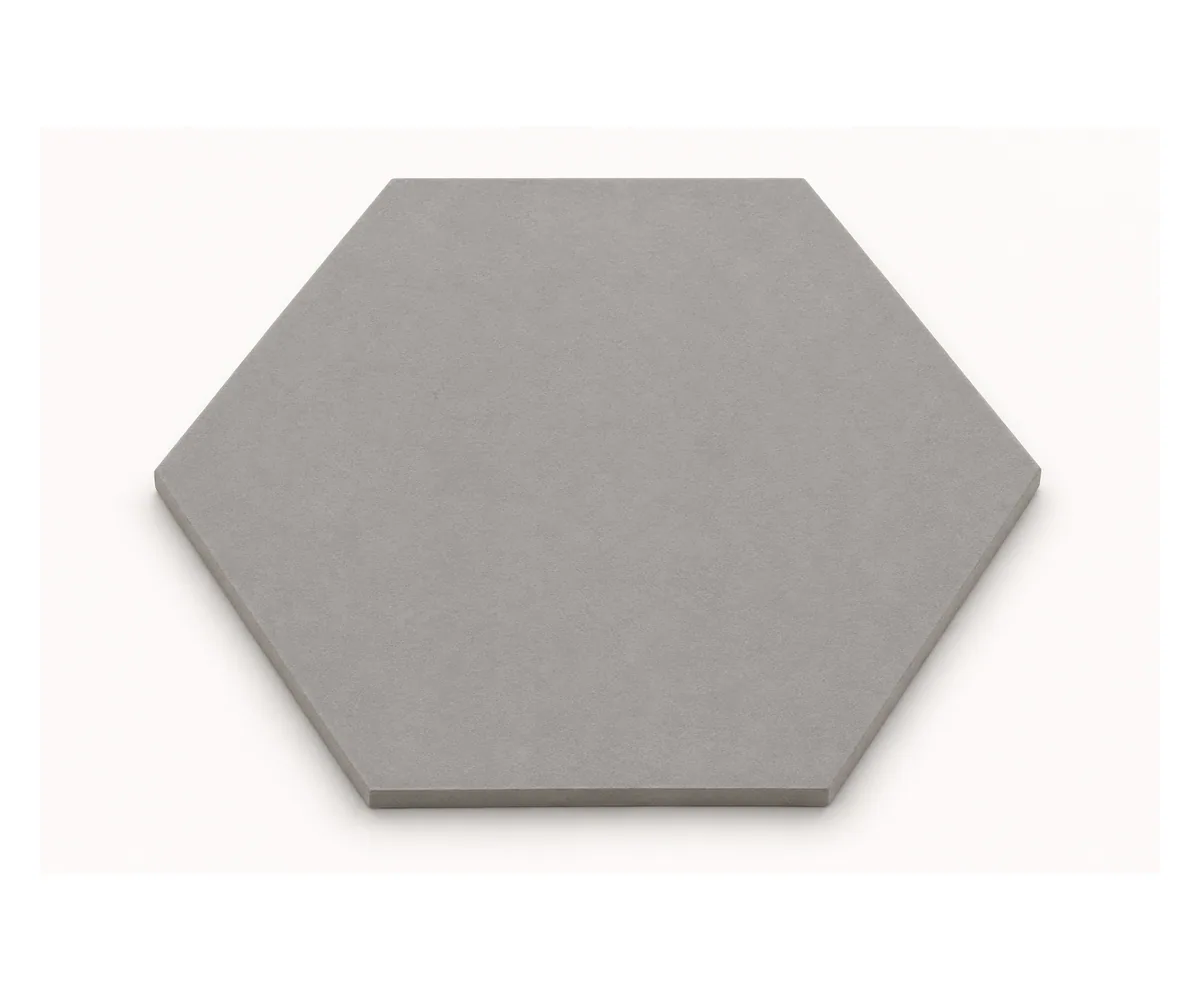 Unglazed Large Hexagon Porcelain Floor Tiles