On this page
The best outdoor furniture materials for a hotel depend on the whole chair and the work required to keep it in service. For a coastal breakfast terrace cleared every evening, a suitable coated-aluminum chair may be the strongest operational choice. A sheltered lounge may favor teak or synthetic weave. A frequently rearranged café may favor a specified molded-polypropylene chair. None wins every exposure, cleaning and repair task.
This comparison covers six seat constructions, not six interchangeable ingredients. Aluminum, stainless steel and teak can form load-bearing parts; a sling or woven fiber usually needs a separate frame. Cushions add another care system. The recommendations below are conditional procurement judgments, supported by actual manufacturer construction and care examples rather than a hotel field trial or a predicted service life.
Start with exposure and the staff routine
“Outdoor” is too broad a specification. Record whether furniture receives salt-laden air, direct sea spray, pool splash, full sun, rain or mostly sheltered use. Also record where it goes during storms and when the venue closes. A covered coastal terrace still receives airborne deposits; a roof does not establish a maintenance-free environment.
Then describe the operator’s work in concrete terms:
- Who moves the chairs, along which route, and where approved stacks or individual chairs fit.
- Which water supply, cleaning products and drying space are available.
- Whether a naturally changing wood appearance is acceptable or the design requires a consistent new-looking finish.
- Who can replace feet, fasteners, slings or woven sections, and where damaged chairs wait safely out of service.
These answers can change the preferred construction without changing the climate. Obtain the exact product’s commercial-use evidence and conditions separately. A material description does not establish whole-chair strength, stability, wind security or suitability for a particular hotel operation.
Six constructions, with a different maintenance decision for each

1. Coated aluminum frame with aluminum seat and back
This is a useful first shortlist for frequent rearrangement and coastal dining where staff can wash and inspect the furniture. Fermob’s contract materials guidance identifies aluminum as a coastal option. Its care instructions still require cleaning deposits and maintaining foot protectors. “Aluminum” should therefore describe the structure, with the coating system, joints and other components identified as well.
The tradeoff is visible finish damage. Gloster’s powder-coated-aluminum guide explains that liquid-paint repair cannot perfectly reproduce the powder-coated appearance. Agree whether a small approved touch-up is acceptable or a guest-facing part must be replaced. Do not promise an invisible repair. Confirm actual chair weight, stack limit and contact protectors rather than assuming every aluminum design is convenient to move.
2. Stainless-steel frame with a tensioned sling
A specified stainless frame and sling can provide a relatively open dining seat without a loose cushion. Barlow Tyrie’s Equinox chair is a real example: a 316 stainless frame with Textilene seat and back, offered as stackable. That combination matters more than the word “metal.” The sling, its attachment and the frame each need their own inspection.
Choose it where the team accepts the supplier’s metal-cleaning routine and has a practical sling service route. Barlow Tyrie’s product care notice acknowledges brown surface marking on stainless steel; the grade is not a promise of an untouched appearance. Ask which marks are cosmetic and which damage requires assessment. A replaceable-looking sling is not proof that a local upholsterer can tension or fit a replacement correctly.
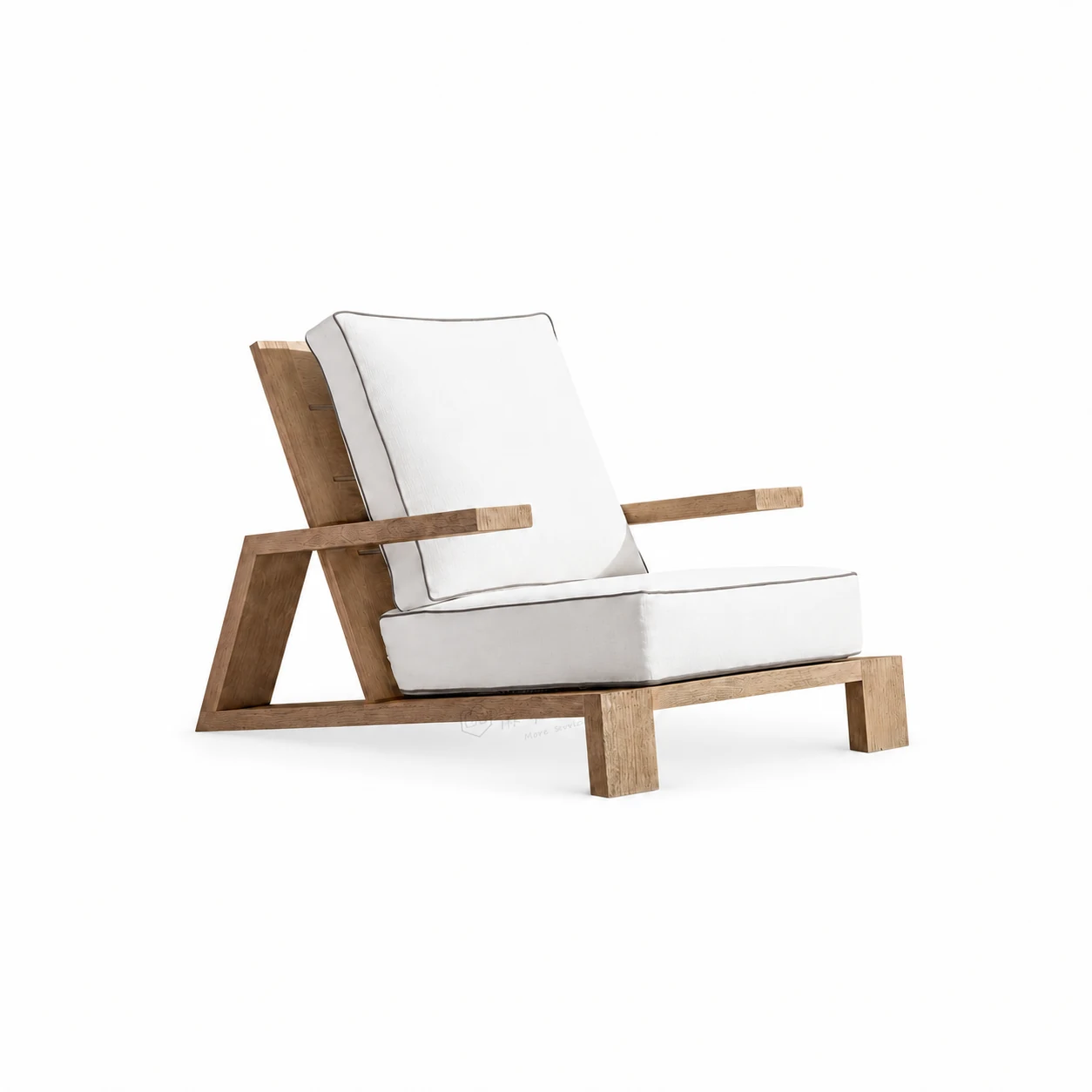
3. Solid-teak frame with teak seat and back
Teak suits spaces where timber character and a changing natural appearance are welcome. Barlow Tyrie’s Monaco chair uses natural teak and shaped solid-teak components; it is an actual chair construction, not a wood overlay on an unspecified frame. Check joints, feet and assembly requirements along with the timber description.
The appearance policy is the main operating decision. Gloster’s teak guide distinguishes allowing the wood to weather gray from maintaining a fresh brown appearance with its specified care system. Those are different commitments. Its guide also warns against power washing teak. Follow the ordered manufacturer’s instructions instead of applying a plastic-chair cleaning routine. Teak is a poor fit when the operator expects a permanently uniform new-wood color but has allocated no work to maintain it.
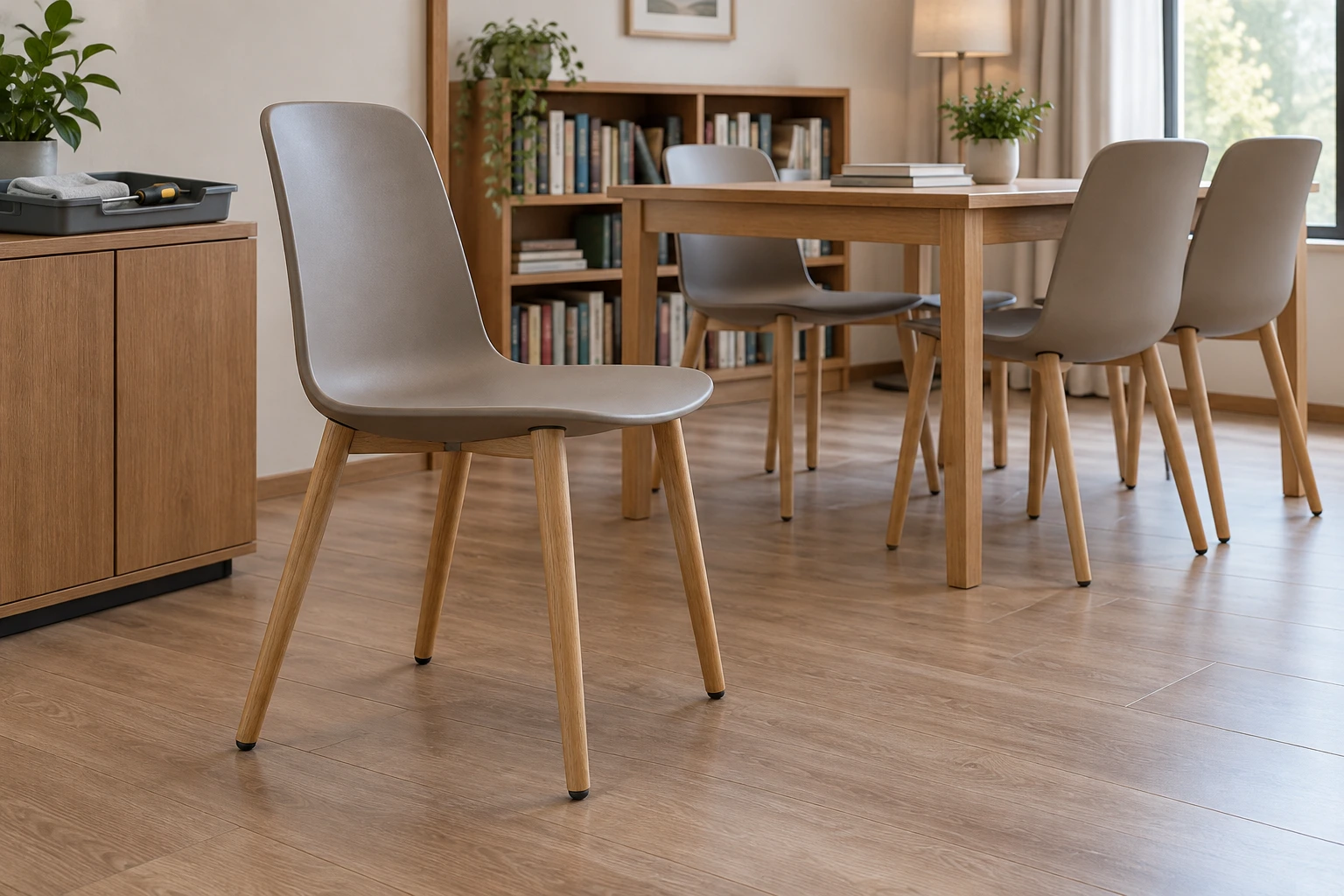
4. Molded, fiberglass-reinforced polypropylene chair
A monobloc construction removes the separate sling or woven skin from the seat specification. Pedrali’s Remind 3730RM technical sheet identifies injection-molded, glass-fiber-reinforced recycled polypropylene with anti-UV treatment. That product description does not establish the behavior of every plastic chair, every color or every recycled formulation. Name the exact resin construction and outdoor product.
This can be a practical café shortlist when the sample meets the hotel’s comfort, cleaning and handling needs. Confirm authorized stacking and the condition of feet. For a cracked load-bearing molded part, the purchasing plan should provide a replacement route unless the maker approves a specific repair; do not improvise a structural patch. Obtain the product’s care instructions before accepting the hotel’s detergent or disinfection routine.
5. HDPE-lumber frame with HDPE-lumber seat and back
Assembled plastic lumber is a different proposition from a thin molded shell. POLYWOOD’s Signature dining chair is a real HDPE-lumber example. Its lumber-care guidance describes soap-and-water cleaning and warns against abrasive scrubbers. Treat the fasteners and assembled joints as separate maintenance items; a lumber description alone does not settle their exposure or service needs.
Shortlist it where the actual chair is comfortable and the operator accepts its handling and storage format. Evaluate its weight and grip on the real moving route. For repair, require confirmation that the particular slat or component can be supplied and replaced without compromising the assembly. Do not assume that a generic HDPE board is an interchangeable structural spare.
6. Synthetic weave over an identified coated-aluminum frame
This is a layered seat: the fiber provides a woven sitting surface while the frame carries the assembly. Fermob identifies braided polymer on aluminum in its Croisette and Sixties collections. Gloster’s own woven-furniture guide describes PE weave over a welded, powder-coated-aluminum frame. These examples support asking for both parts of the specification; they do not make all “rattan-look” products equivalent.
It is a strong aesthetic candidate for sheltered lounges when staff can clean between strands and a repair service exists. Gloster’s guide addresses cleaning residue in the gaps and replacement of broken woven sections. Availability of a matching fiber and a capable repairer still needs confirmation for the ordered chair. Inspect hidden frame areas and the underside, not only the attractive weave. A cushion-dependent version also needs a drying and storage plan.

Compare the same four operating demands
Use this as a shortlist, then replace each condition with the offered product’s documents and a physical sample. “Confirm” marks a procurement task, not a favorable performance claim.
| Construction | Exposure and moving | Cleaning and repair |
|---|---|---|
| Coated aluminum / aluminum seat | Coastal shortlist with appropriate finish and care; confirm sample weight and approved stacks. | Remove deposits using approved routine; inspect coating and feet. Agree visible touch-up versus replacement. |
| Stainless frame / sling | Specify grade and finish; confirm actual stack and handling. Coastal marking still needs attention. | Separate metal and sling care. Confirm sling parts, fitting service and frame inspection. |
| Solid teak | Accept weathering or fund appearance care. Confirm actual moving and storage format. | Use timber-specific cleaning. Agree joint assessment and repair; replacement must match the ordered construction. |
| Molded reinforced PP | Require exact outdoor formulation and color evidence. Confirm permitted stacks and feet. | Check cleaner compatibility. Plan replacement for structural cracking unless maker approves a repair. |
| HDPE lumber | Require exact assembly evidence. Check actual weight, grips and storage rather than assuming easy daily movement. | Clean lumber and check hardware separately. Confirm model-specific spare components and fitting. |
| Synthetic weave / coated aluminum | Identify fiber and hidden frame. Confirm exposure scope, moving format and any cushion needs. | Clean strand gaps and inspect underside. Confirm matching fiber and authorized reweaving or replacement. |
Which is best for coastal, full-sun and sheltered spaces?
Coastal dining: start with a documented coated-aluminum construction, an outdoor polymer construction or another product whose supplier explicitly accepts the site’s exposure. Compare the whole assembly and cleaning burden. Stainless can remain a candidate, but “316” does not remove care work. Direct breaking-wave exposure needs a fresh product-specific review; it is not covered by a general seaside recommendation.
Full sun: require evidence for the exact finish, fiber or resin and review the actual color sample at the site. Do not rank comfort from the material name. Trial sitting surfaces under representative conditions and provide appropriate shade or a different arrangement if the operator cannot achieve acceptable comfort. A UV claim is not a lifetime forecast, and a warranty is not a laboratory comparison of all six options.
Sheltered lounges: teak and synthetic weave become attractive when guests value their appearance and the operator can support the care system. Confirm rain exposure at the perimeter. Add cushions only after specifying cover care, filling, water management, removal, drying and spare covers. Cushions are a separate procurement layer, not a seventh competing frame material.
Exposure, daily handling and cleaning access inform material choice.
A completed choice for a coastal breakfast terrace
The buyer needs 24 dining chairs on a coastal terrace exposed to salty air but outside direct wave and pool splash. Staff clear the terrace daily. A fresh-water cleaning point and ventilated chair store are available; there is no dedicated cushion-drying store.
Assume the buyer reviews all six constructions above and receives these written responses for the offered variants. The coated-aluminum/aluminum-seat supplier accepts the described exposure subject to its care instructions, supplies a commercial-use evidence package, confirms the proposed stacking arrangement and offers replacement feet. In an assumed sample trial, staff move and store that chair comfortably and guests accept the seat without a cushion. The team also approves the supplier’s cleaning routine.
The completed decision is to buy the coated-aluminum construction for all 24 positions, in the approved light finish, without loose cushions. The order includes spare feet and the agreed stacking protectors. The operator accepts that approved finish touch-ups may remain visible; major guest-facing coating damage goes through the agreed replacement assessment.
The buyer rejects the offered cushion-dependent woven variant because its required drying arrangement is absent. It removes the offered HDPE-lumber chair from this terrace because the assumed staff trial finds that particular model awkward on the daily route; that is not a finding about every HDPE chair. Teak is declined because the design team will not accept gray weathering and the operator will not fund its proposed brown-color care program. The stainless/sling offer is not selected because the operator prefers one metal-surface cleaning system and no sling service dependency. The PP sample remains an acceptable alternative, but a second seat type would add no required function here, so it is not ordered.
Before production release, the buyer still verifies the exact model, finish, dimensions, evidence applicability, stack limit, commercial terms and approved sample reference. These checks execute the completed material choice; they do not reopen the example as six equally undecided options. Wind procedures, floor suitability and evacuation routes remain site operating decisions rather than benefits inferred from chair weight.

Buy the maintenance route with the chair
Keep the accepted sample, construction schedule, cleaning sheet and spare-parts reference together. Define who assesses a loose joint, torn sling, damaged weave or cracked body, and how a chair is taken out of guest use. Record service charges and transport separately from a statement that a repair is technically possible.
For a coordinated hotel package, send NOVARMIA the exposure description, seating type, daily moving route and cleaning resources. Ask for comparable construction, care and replacement information for the actual offers. This supports a complete procurement comparison without assuming that one material or one group supplier manufactures every component.
FAQ
Can I compare warranties to estimate which material lasts longest?
A warranty defines commercial coverage and exclusions for a particular product and use. Check coastal, commercial and finish conditions. Different warranty terms do not form a controlled service-life test, so do not convert them into a six-material lifespan ranking.
Does heavier furniture solve a windy rooftop’s safety problem?
Weight alone is insufficient. The site’s wind management, furniture geometry, permitted restraints, storage and closure procedures need an appropriate site assessment. Do not replace that work with a heavier-material recommendation.
Can housekeeping use one cleaner for chairs, cushions and tables?
Only where each relevant product’s instructions allow it. Build a compatibility schedule for all surfaces and textiles; one convenient cleaning product is not automatically acceptable for every component. Keep the approved dilution and method in the operating instructions.
Should spare chairs match the initial batch exactly?
Agree an acceptance policy before ordering. Retain the finish and model references, and ask how later batches and weathered originals will be matched. A spare-parts promise does not guarantee an invisible color match after exposure; the hotel may prefer a planned replacement grouping.