Polished Taj Mahal Quartzite
A polished face reflects more light and brings the mineral movement forward. Use it for a reflective countertop or feature surface, with the edge finish chosen at the same time.
Taj Mahal Quartzite Slabs
Taj Mahal has a warm beige ground with pale mineral movement and irregular tan-gray veining, the natural pattern of the stone, so adjoining slabs differ in shade, density of movement and mineral features.
The material can be specified as slabs for local fabrication or as cut pieces for countertops, wall panels and flooring. A cut-piece order identifies each piece by room and position, with its finished dimensions, exposed edges and surface finish.
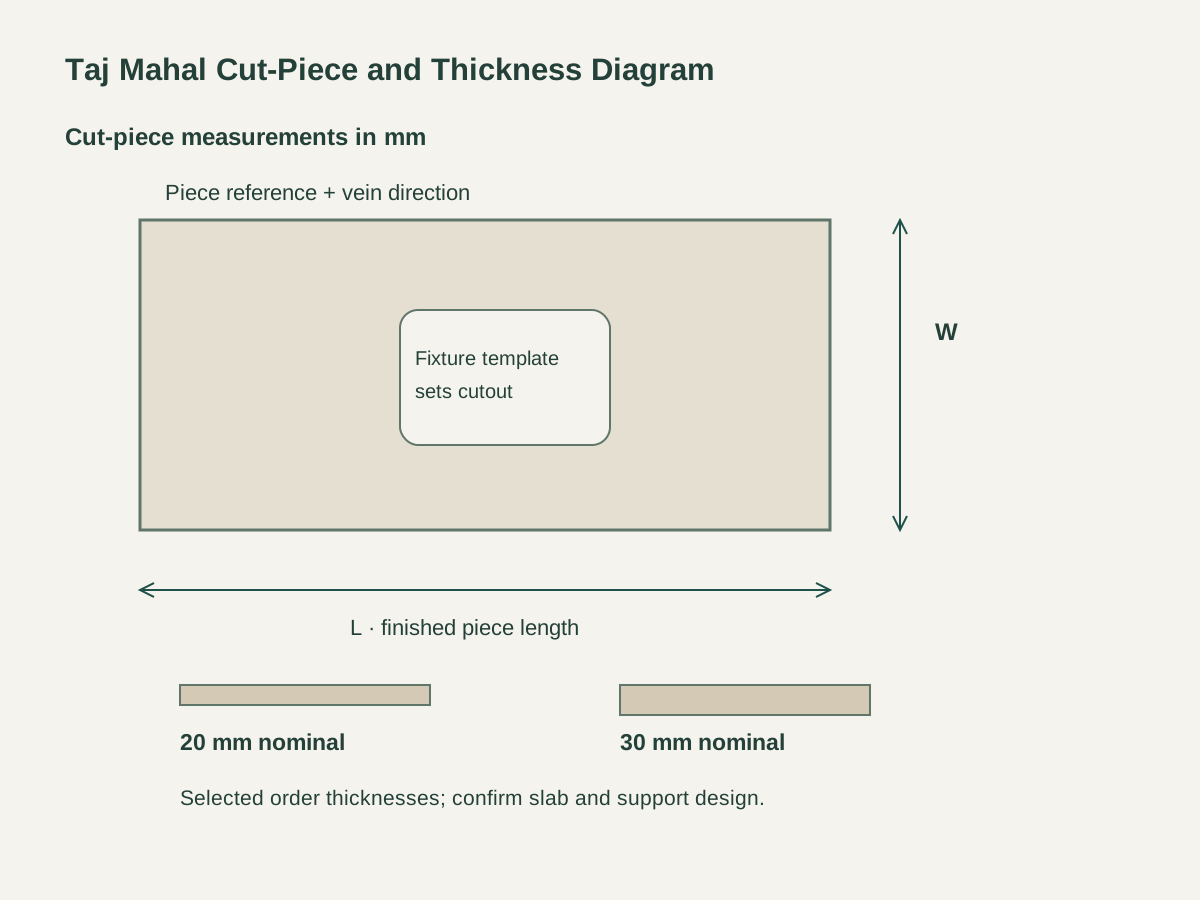
Specify 20 mm or 30 mm nominal thickness in the piece schedule. Match the selected thickness to available slabs and the cabinet or support design. Overhangs and cutout rails need their own support details.
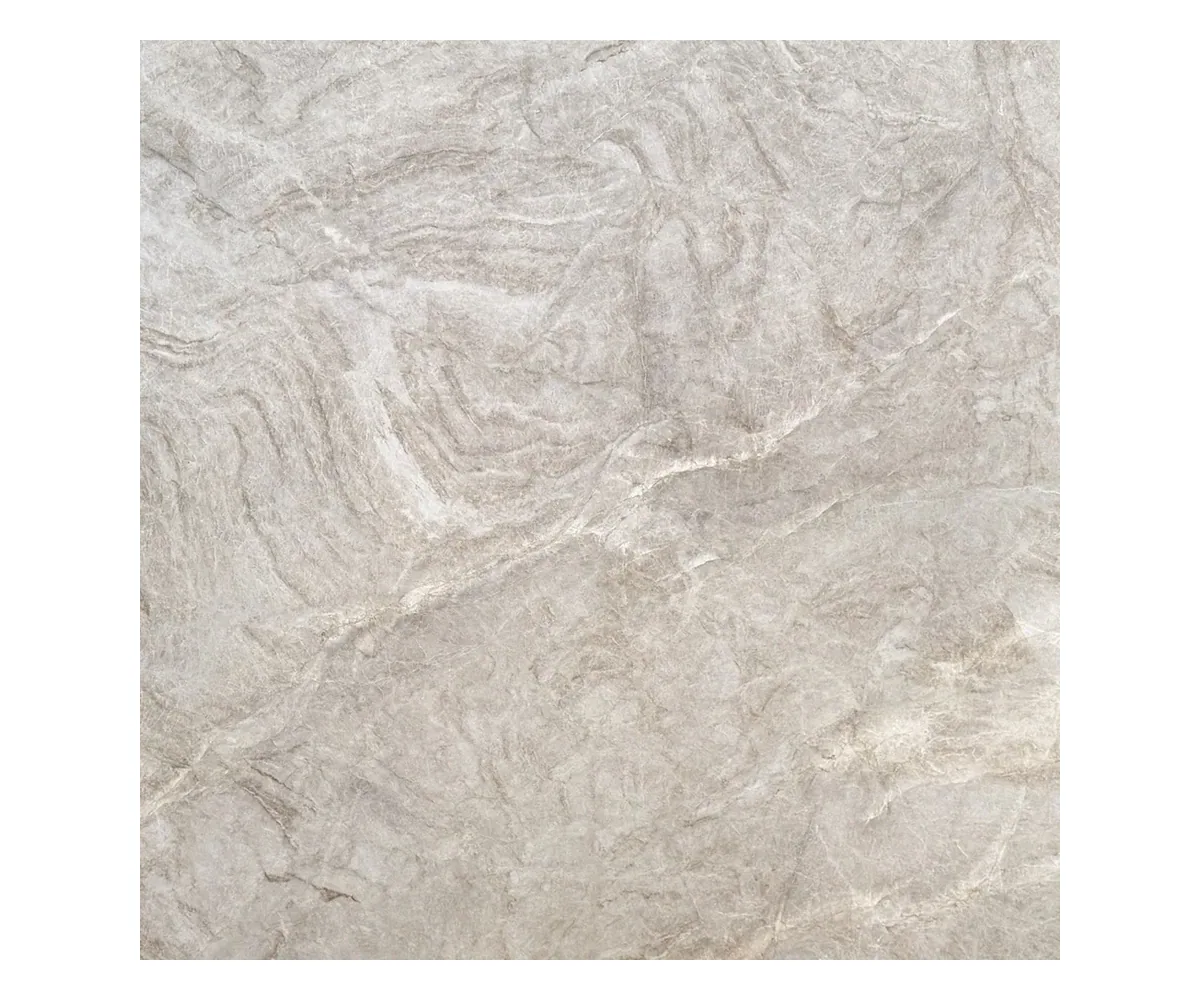

A polished face reflects more light and brings the mineral movement forward. Use it for a reflective countertop or feature surface, with the edge finish chosen at the same time.
A honed face has a softer, less reflective appearance. It changes the way light reads across the beige pattern. Flooring requirements belong to the selected stone, finish and test documentation.
Approve the actual slab faces for the order, including areas with strong veins or tonal changes. Mark the direction of each cut piece on the slab layout. A small sample establishes a color reference, while full-slab images show how the larger pattern will fall.
| Stone | Natural Taj Mahal quartzite |
|---|---|
| Surface options | Beige natural quartzite with a polished surface |
| Color and pattern | Beige with crystalline mineral movement; natural slab variation |
| Nominal thickness | 20 mm or 30 mm selected order specification; slab availability to be matched |
| Finished size | Cut to the project piece schedule; length and width in mm |
| Edge detail | Selected finished edge, mitered build-up or return shown on the cut schedule |
| Applications | Countertops, wall panels and flooring with application-specific support |
| Selection record | Actual slab references, face finish, vein direction and numbered cut pieces |
| Standards & certificates | Matched to the ordered model: tell us the standards or certificates your market or project requires, and we confirm in writing which documents are available for this configuration before you order. |
 Open product drawing ↗
Locate seams before cutting and carry the preferred vein direction across adjoining pieces. A waterfall return needs its own piece reference, edge joint and underside treatment. A thick-looking mitered edge is a built-up detail.
Use the actual appliance and fixture templates for openings. Record cutout position from fixed edges, internal corner details and the width of stone left around the opening. The support arrangement must account for these narrower stone sections.
Wall and floor pieces need a separate joint and fixing plan from a countertop. Coordinate the substrate, finished level, stone thickness and adjoining materials. Attachments and support are selected for the application.
The chosen slabs and the cut layout affect the material quantity. Strong vein placement, seam matching and discarded areas can change usable yield even when the finished surface area stays the same.
Compare like-for-like quotes with the same nominal thickness, polished or honed face, edge profile and number of finished sides. Separate a simple finished edge from a mitered build-up, waterfall return or shaped profile.
State whether the order is slabs only or finished cut pieces. For fabricated pieces, list every sink, cooktop and faucet opening, exposed cutout edge and any underside finish, with site templating and installation agreed as site work.
Room and piece references go on the cut schedule and packing list, and the supply lists the stone pieces, protective packing, destination and shipping terms, so local handling can be planned around the real package sizes.
This is natural quartzite cut from stone slabs, a different material from engineered quartz. Keep the material name on the order and choose from the actual slab faces.
Polished stone has a more reflective face; honed stone has a softer sheen. Both retain the natural mineral pattern. Compare physical finish samples under the room lighting, especially where a countertop meets a backsplash.
They give different edges and need different support details. Choose the thickness with the fabricator and the cabinet or support plan and match it to the available slabs; a thicker-looking edge can also be built up with a mitered detail.
The cut layout can align the chosen vein direction and adjoining pieces. Natural patterns vary, so continuous veining or a bookmatched pair cannot be assumed. Approve the actual slabs and their proposed cut layout before fabrication.
The Group material range includes wall and floor uses. The selected finish, substrate, waterproofing, joints and fixing system must suit the location. A honed face is not a substitute for any slip-resistance evidence required for a floor.
Sealing is selected for the actual stone, its treatment and intended use. An appropriate impregnating product can reduce staining. Use a stone-compatible cleaner and follow the care instructions for the selected slab and sealer.
 Patagonia Quartzite Slabs
 Quartzite Waterfall Island Slab Sets
 Cristallo Quartzite Slabs
 Quartzite Shower Bench Seat and Apron Sets