On this page
Start coffee table decor by putting a mug where you would naturally reach for it from the sofa. Add the remote, the book you are reading, or whatever usually lands beside you. The space those things need is the space to keep available. Build the decorative arrangement around it.
A tray, a few books, and a low vase can work on many tables, but their positions matter more than collecting every item on a styling checklist. The layouts below show where to put them, what to leave clear, and what to change for square, nesting, glass, shelf, and upholstered tables.
Give the table a working side
Look at your coffee table from the seats people actually use. Which edge do you reach over to set down a drink? Does someone regularly stretch out their legs, open a laptop, or play a game here? Start with the busiest seat, rather than the view from the doorway.
Put the daily-use objects on the bare table before adding decoration. You may need two separate landing places for drinks, or one larger patch for a book. On a shared table, leave each person somewhere usable without moving a vase first. There is no fixed percentage of tabletop that every household should decorate.
Move the display toward a quieter part of the surface. It can sit off-center. A coffee table centerpiece does not have to occupy the geometric center of the table, especially when that is the most useful place for a serving dish or an open magazine.
This is also a useful way to choose a theme. Studio McGee's coffee table styling guide starts with different uses—books, collected objects, or games. Pick the activity your table already supports, then select a few things worth keeping on display.
Build one group that can move together
Before buying anything, gather a tray, two books, one vessel, and the small items already on the table. These are starting materials, not a required shopping list. A small table may need only the tray and one object.
Use a tray for the loose things
Place the remote, a small catchall, and spare coasters inside the tray. Leave the remote visible enough to find and easy to pick up without reaching around the vase. If the tray is so full that you have to rearrange it to remove the remote, take something out.
Treat the tray as a movable part of the room. Choose one you can lift comfortably with its normal contents. Try carrying it to the place where it will wait during dinner, a board game, or cleaning. A beautiful arrangement that has nowhere to go will soon be dismantled one object at a time.
Pottery Barn's six styling suggestions make the same practical point: grouping objects on a tray lets you remove the display when you need the surface. Here, that removable group is the starting point for the whole layout.
Give books a job
Use books you would enjoy opening. A modest stack can create a separate visual level, bring in a cover color from elsewhere in the room, or provide a place for one small object. Keep the broadest book at the bottom and make sure the stack sits flat.
Books stop being useful decor when every one is pinned under something fragile. Keep the book you are reading at the top with nothing on it, or put the decorative object beside the stack. An open book needs room for both pages and belongs on a table where it can remain dry and usable.
You do not need to fill a large table with books. Start with one stack and look at it from the sofa. If it already gives the arrangement enough weight, leave the rest of the surface alone.
Choose one focal object, then check the view
A vase, a small plant, or an object you enjoy looking at can be the focal point. Give it enough room that its outline is visible. Three small objects pressed against the vase often add clutter without adding much to the composition.
Use height carefully. A taller object can distinguish the display from the flat book covers, but the arrangement still has to work between people sitting opposite each other. Emily Henderson's styling guide distinguishes between dramatic height in photographs and an arrangement that leaves seated sightlines open.
Sit down and look across the table. If the stems cut through the person or screen you want to see, shorten the arrangement or move it away from that line of sight. A low, wide vessel may suit the room better than a tall bouquet.
Round coffee table decor: keep an open arc
On a round table, a compact group often works better than a ring of objects around the edge. Start the tray toward the far side of the tabletop. Put the books slightly to one side of it, rather than centering both on the same line. Keep the arc nearest the sofa available for drinks and daily use.

A tray, one book stack, and an open reach side. The numbers match the object list beside the plan.
To copy this layout:
- Set the tray toward the quieter side, with enough tabletop beneath it to sit securely.
- Put a low vase and the remote dish inside the tray. Keep the remote toward the accessible edge.
- Place one book stack beside the tray, leaving a visible gap between the groups.
- Keep coasters close to the open arc. Put a mug down and pick it up from your usual seat.
If the book stack consumes the only useful landing place, remove it. The vase and remote dish can stay together in the tray. That smaller version is often the better choice for a compact round coffee table.
For round coffee table decor ideas with a different look, change the objects before changing the layout. Try a plain ceramic vessel beside a patterned book cover, or a textured tray with one smooth bowl. The working arc stays in the same place.
Rectangular coffee table decor: organize along the length
A long tabletop gives you room to separate the decorative group from books. It also makes it tempting to place something in every gap. Keep a usable strip on the side reached from the sofa, and arrange the display farther back.

Two display groups use the length of the table while the sofa side stays available.
Put the tray at one end and the books toward the other. Place the low vase inside the tray if the whole display needs to move together. If the vase sits outside it, remember that clearing the table will become a two-part job.
Keep the remote on the side closest to the person using it. A catchall tucked behind books may look tidy from the doorway but fail in daily use. Likewise, coasters should not be trapped beneath the decorative stack.
You can reverse this arrangement to suit the room. If the main seat is at the right, keep its reach area open and shift the display toward the left. If people use both long sides, keep the group compact and check access from each seat instead of assigning the entire near edge to one person.
When the table has a strong wood grain or a patterned stone surface, try leaving the middle entirely unfilled. The tabletop itself can supply the visual interest between the two groups.
Adapt the arrangement to other table types
The useful part of a layout is the relationship between the display and the open surface. You can preserve that relationship without putting the same objects in the same positions on every table.

Square tables: leave one near corner available
A square table can take a tray toward one far corner and a book stack toward the other. The remaining near corner becomes the first place to set down a drink or open a book.
Avoid turning every corner into a separate display just because the surface looks divisible into four squares. If the center becomes difficult to reach or the table feels crowded from the sofa, combine the smaller objects in the tray. One quiet corner can make the other groups easier to see.
With seating on several sides, test the arrangement from each position. An open corner on the plan is only useful if someone can actually reach it.
Nesting tables: preserve the movable surface
Keep the main decorative group on the table that normally stays in place. Leave the smaller, frequently moved table clear, or give it only an object that is easy to relocate.
Before finishing, move the tables through their normal positions. A vase that appears clear of the other tabletop may obstruct it as the tables tuck together. Books left on the lower table can also prevent a set from nesting, depending on its construction.
Decorating every top separately often creates work every time you need the extra surface. Let the movable table become a place for guests' drinks or a book instead. Follow the movement and loading instructions for the particular set you have.
Glass tables: inspect the layers underneath
Look through the top from the sofa. The rug, table frame, lower shelf, and undersides of objects all enter the composition. A tray can give small objects one visual boundary, but several overlapping trays and book stacks may hide the transparent surface you wanted to keep visible.
Begin with one tray and one book, then stop and look again. Keep the bases of objects clean, and lift the tray when moving it rather than dragging it across the top. Use surface protection that is compatible with the table maker's care instructions.
A glass table with a lower shelf needs particular restraint: items on both levels can appear to sit on top of each other from an oblique angle. Choose which level holds the display before filling the other.
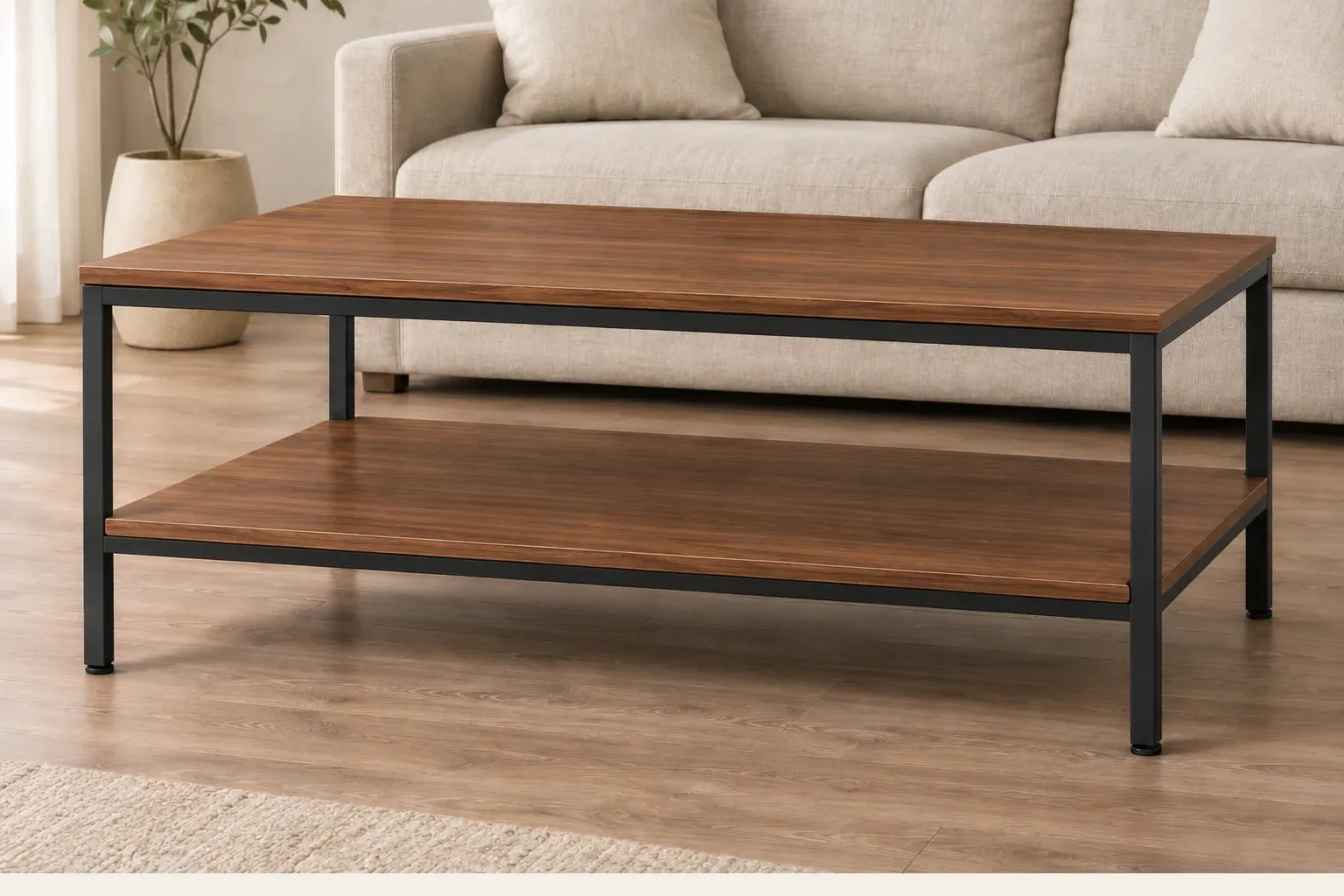
Tables with a lower shelf: separate storage from display
Use the top for the objects you reach for during the evening. Put less frequently used books or a suitable basket on the lower shelf. Leave enough access to remove them without disturbing the display above.
Keep the lower arrangement simple. One horizontal stack of larger books may be easier to live with than a row of small objects that need individual dusting. If the table also has drawers, open them fully while the top is decorated. Nothing should need to move just to reach everyday storage.
With a transparent top, decide how the upper and lower groups line up in the seated view. With an opaque top, concentrate on access and keeping the shelf from becoming a place for everything that has no other home.
Ottoman tabletops: make room for their other use
If the maker permits tabletop use, place a rigid tray on a level part of the ottoman and check it with its ordinary contents. Some upholstered tops compress or slope. If the tray rocks or tilts during normal use, put drinks on a hard-topped side table instead.
Keep the arrangement light enough to lift off in one trip, and give the tray a nearby resting place. Leave part of the ottoman available if people use it as a footrest. If it has a hinged storage lid, clear the lid before opening it.
A tray full of objects that must be moved separately defeats the point. A low vessel and a remote dish may be all this surface needs.
Choose objects that let the tabletop show
Modern coffee table decor does not require a prescribed color palette. Start with what is already visually busy in the room: the rug, upholstery, artwork, and the table itself. Then give the table a few objects whose shapes remain easy to distinguish.
| Table or room condition | An arrangement to try | What to check |
|---|---|---|
| Strong wood grain or veined stone | One plain tray, a simple vessel, and one book cover color | Can you still see the tabletop between the groups? |
| Dark tabletop | A lighter book cover or vessel beside a textured tray | Do the objects remain distinct in the room's normal evening light? |
| Glass top over a patterned rug | Fewer opaque objects in one compact group | Do the rug and lower layers make the display look busier from the sofa? |
| Small tabletop | One removable tray with the remote and a low focal object | Is there still a useful place to put a drink down? |
| Several finishes in the room | Repeat one existing color or texture in the tray or vessel | Does the choice connect to something you already own? |
Crate & Barrel's coffee table decor guide offers several style directions rather than one fixed arrangement. Use those as visual references, then let the table's actual use determine how much stays on it.
Choose contact materials with the surface in mind. Keep the bottom of trays and vessels clean, use suitable coasters for drinks, and follow the care instructions for the table's finish. A decorative tray is not automatically waterproof or heatproof, and a plant pot should not depend on a book underneath it to contain moisture.
Keep the remote, coasters, and daily clutter in the plan
The remote should have a visible place to return to. Use a shallow dish inside the tray or a dedicated compartment that you can reach without lifting the books. Pottery Barn's organizing guide treats trays and grouped objects as part of a practical storage arrangement; the point is to reduce the loose pieces you have to manage.
If several people use the table, make the return location obvious. Do not rely on everyone knowing that one particular book hides the remote. Store spare coasters together, but keep the ones in use on the working side.
For a room used by young children, pets, or a busy group of guests, favor a smaller arrangement that can be removed quickly. Keep valuable or easily knocked-over objects elsewhere. If you like the look of candlelight, an LED candle can provide that part of the display without adding an open flame to a busy tabletop.
You can also leave the table completely clear for part of the day. Move the tray aside for games, drawing, serving food, or any activity that needs the surface. Put it back when the activity is over. The arrangement is working if that change feels ordinary.
Check the arrangement during a normal evening
Live with the layout before adding another object. Set down a drink, find the remote, take out a book, and move the tray. Sit opposite another person and check the view across the table. Open any drawer or storage lid you normally use.
If one of those actions is awkward, change the layout at the point where it fails. Move the remote dish forward, take the ornament off the reading book, lower the flowers, or remove the second stack. Coffee table decorating ideas become useful when you can see exactly what to keep, what to move, and where the next cup will go.