How is a built-in buffet cabinet different from a home bar cabinet?
This buffet is planned around plates, bowls, cutlery, linens and a surface for serving dishes. A bar adds different storage and equipment, so a sink, refrigeration unit or bottle-storage system is planned as a different configuration.
How deep should built-in buffet cabinets be for dinner plates?
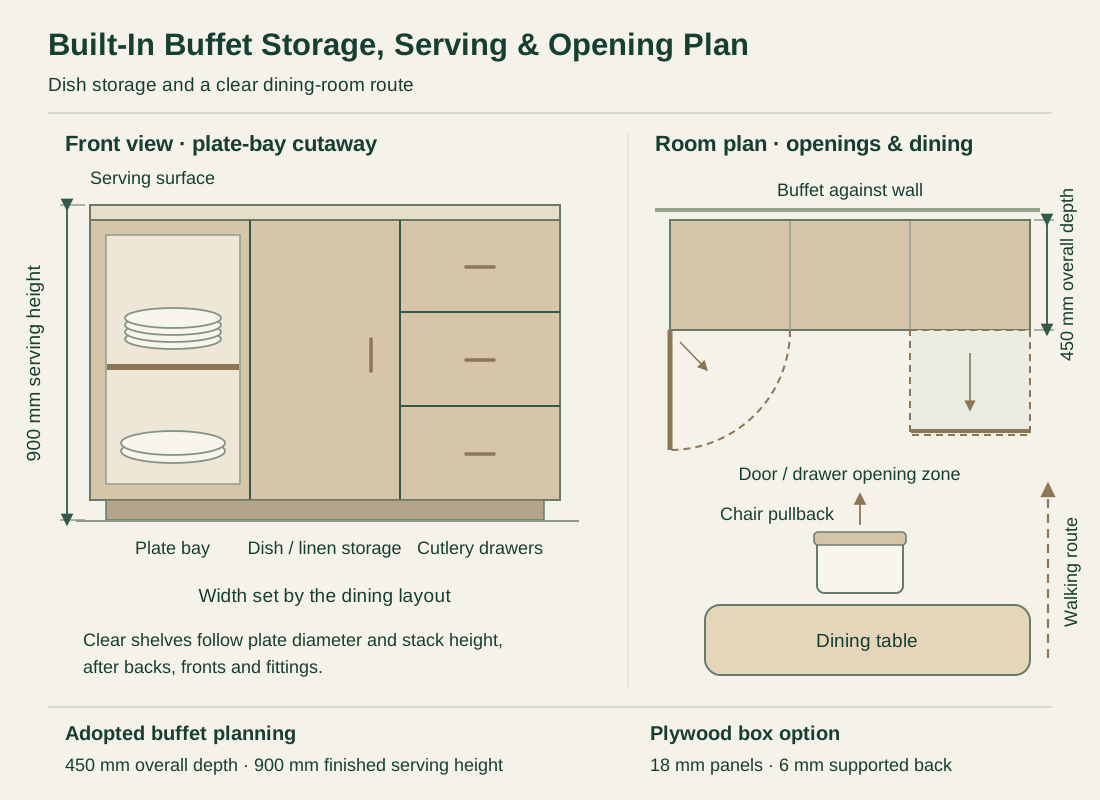
This page adopts a 450 mm overall-depth planning basis. The actual shelf depth is smaller after the back, doors and fittings are included. Large dinner plates and serving platters set the clear dimension needed inside the bay.
Can the buffet have cutlery drawers and dish shelves together?
Yes. Drawer banks and shelved bays can be combined in the same fitted run. The drawer width and depth establish the cutlery-tray size, while plates and bowls establish shelf spacing. Those divisions are recorded by bay so the organizers and hardware match the storage layout.
Are the buffet fronts solid wood when a plywood box is selected?
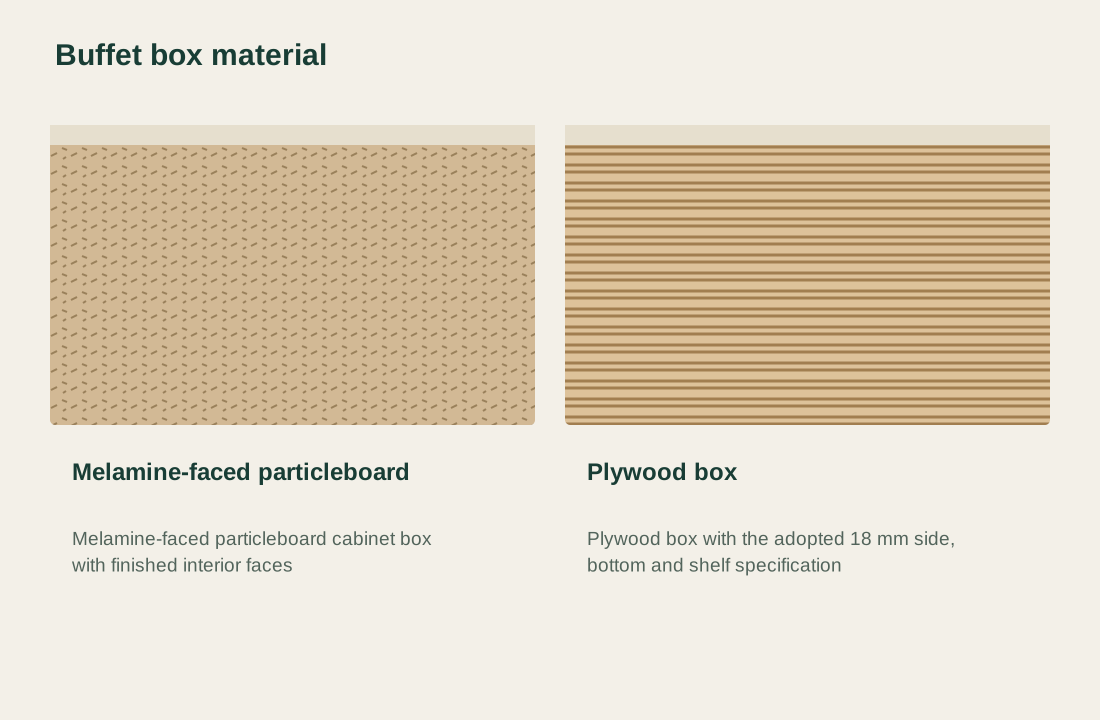
No. The fronts in this configuration are melamine-faced particleboard. Selecting the adopted plywood box changes the cabinet sides, bottoms, shelves and supported back construction; it does not turn the melamine doors or drawer faces into solid timber.
How much room is needed between the buffet and the dining table?
The required space depends on the actual chairs, their pullback position, the cabinet handles and the door or drawer opening path. The room plan retains both access zones. A wall-to-table measurement taken with every chair pushed in can hide a clash that appears when the buffet is being used.
Are the serving top, organizers and installation included in a buffet quote?
They are included when named in the cabinet schedule or quotation. The serving-top material and edges, plate racks, cutlery trays and dividers appear as identifiable items. Packing, freight, unloading, local assembly, fixing and any wall or electrical work are separated from the cabinet subtotal.