Bare Teak Seat at 450 mm
The main configuration keeps the slatted teak surface uncovered. Its front-seat height is 450 mm from the floor to the upper bare seating surface.
Teak Outdoor Dining Armchairs with Slatted Seats
Solid teak forms the legs, seat frame, arms and open back. Clear outdoor wood oil retains the honey-colored grain across the exposed timber and joints.
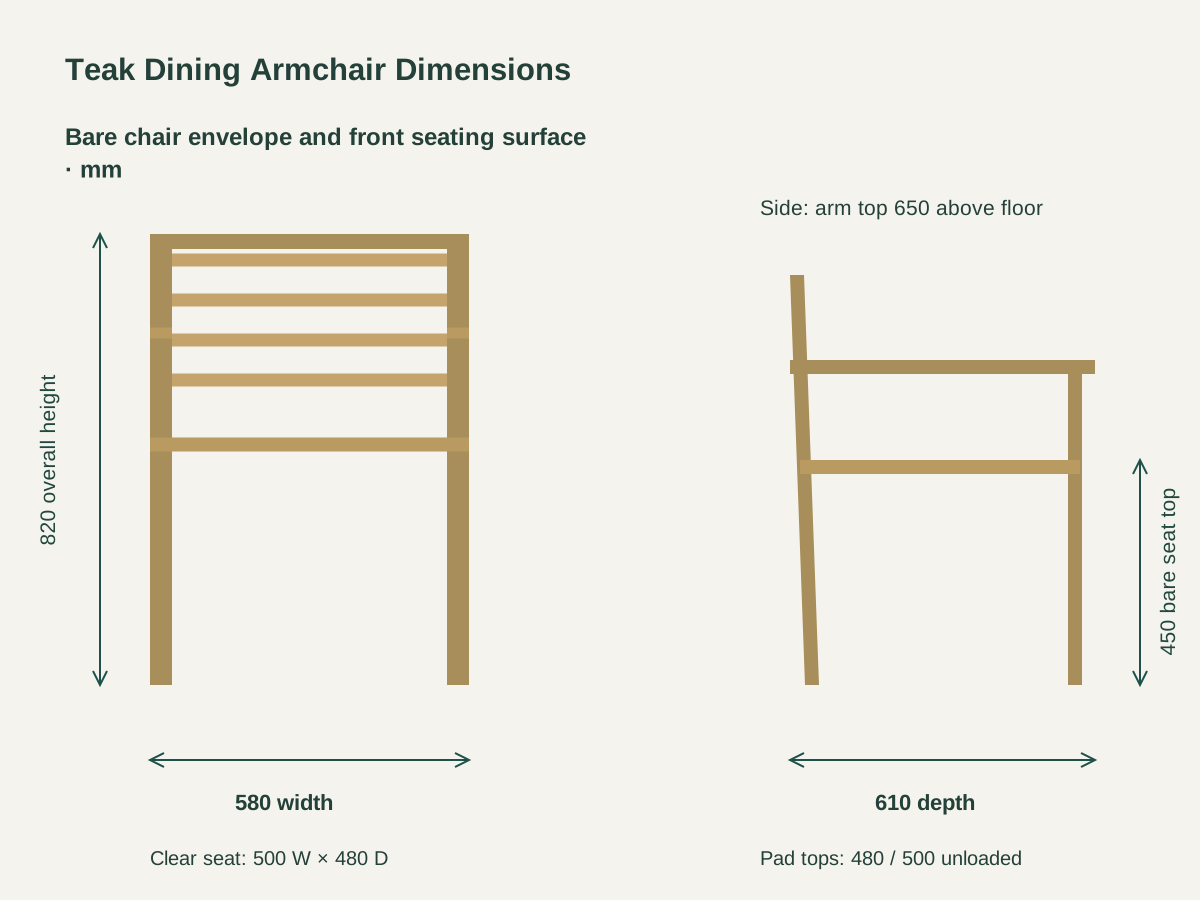
Horizontal slats form the seat and back within the 580 W × 610 D × 820 H mm envelope. The clear seat basis is 500 mm wide and 480 mm deep, with a 450 mm bare front-seat height.
Arm tops are 650 mm above the floor. The pad options use polyurethane foam with oatmeal polyester zip covers; their 30 or 50 mm unloaded thickness adds directly to the 450 mm bare seat basis.

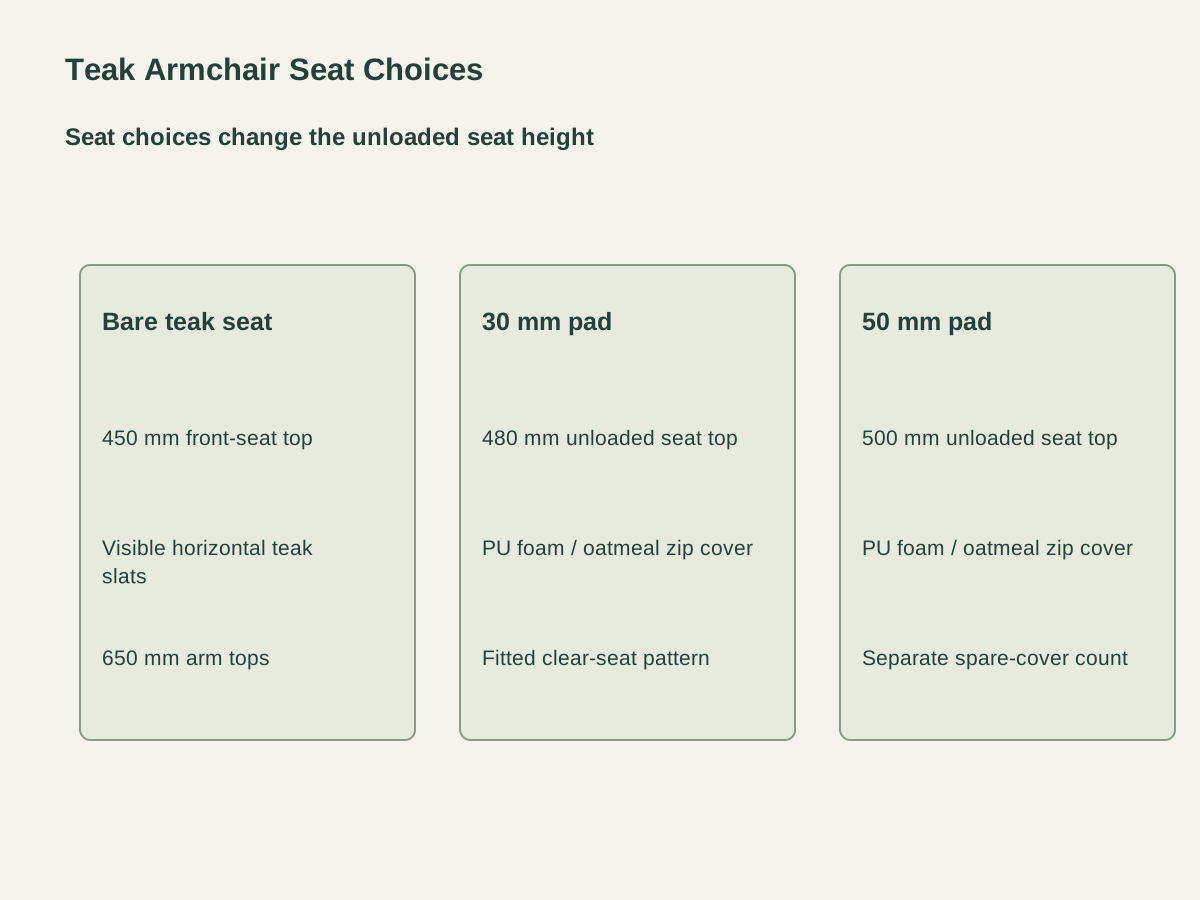
The main configuration keeps the slatted teak surface uncovered. Its front-seat height is 450 mm from the floor to the upper bare seating surface.
A removable 30 mm pad raises the unloaded front-seat surface to 480 mm. The cover pattern follows the 500 × 480 mm clear-seat basis and the actual seat outline.
The thicker pad raises the unloaded seat surface to 500 mm. Its separate foam and cover reference keeps pad replacement and fabric quantities clear in the order.
| Frame and finish | Solid teak; clear outdoor wood oil |
|---|---|
| Seat and pad thickness | Bare slatted seat · 450 mm front-seat top |
| Overall envelope | 580 W × 610 D × 820 H mm |
| Clear seat basis | 500 W × 480 D mm |
| Unloaded front-seat heights | 450 bare; 480 with 30 mm pad; 500 with 50 mm pad, mm |
| Arm-top height | 650 mm above floor |
| Pad construction | PU foam and oatmeal polyester removable zip cover |
| Supply unit | One complete teak armchair with the chosen seat-pad configuration |
 Open product drawing ↗
Locate the 650 mm arm-top height against the table underside and apron. Chair approach, pull-out room and table leg positions use the full 580 × 610 mm chair footprint.
Seat-height comparisons use the front top surface with the pad unloaded. The table-to-seat relationship therefore follows 450, 480 or 500 mm according to the chosen seat configuration.
The finish schedule records teak grain range, clear oil and exposed joinery. Pad orders add the oatmeal textile, zipper, foam thickness and fitted seat pattern to the same chair reference.
Count bare, 30 mm-pad or 50 mm-pad chairs by dining area. All share the 580 × 610 × 820 mm overall envelope and 650 mm arm-top basis.
Quote solid-teak frame members, seat/back slats, arm sections and clear outdoor wood oil. The accepted timber sample records grain, joints and edge finishing.
List 30 or 50 mm foam pads with oatmeal zip covers by chair count. Replacement pads and spare covers receive individual quantities and the matching seat pattern.
Protect arm ends, slats and finished timber surfaces. Mark chairs and pad bundles by dining area, with assembly format, unit counts and destination in the packing schedule.
The chair is 580 mm wide, 610 mm deep and 820 mm high. The dining layout uses that footprint for table approach and chair pull-out space.
The clear seat basis is 500 mm wide and 480 mm deep. Pad patterns follow that basis and the actual outline of the slatted seat.
The bare front-seat top is 450 mm above the floor. A 30 mm unloaded pad raises it to 480 mm, and a 50 mm unloaded pad raises it to 500 mm.
The arm tops are 650 mm above the floor. Match that height to the dining table underside, apron and approach space.
The frame, arms and slats use solid teak with clear outdoor wood oil. Pad options use polyurethane foam and oatmeal polyester removable zip covers.
Count each complete chair by bare, 30 mm-pad or 50 mm-pad configuration. Add replacement pads and spare covers on separate lines using the same fitted seat pattern and fabric reference.
 Round Teak Outdoor Dining Table with a Central Pedestal
 Extendable Aluminum Outdoor Dining Table with a Center Leaf
 Aluminum Rope Outdoor Bar Stool with Footrest
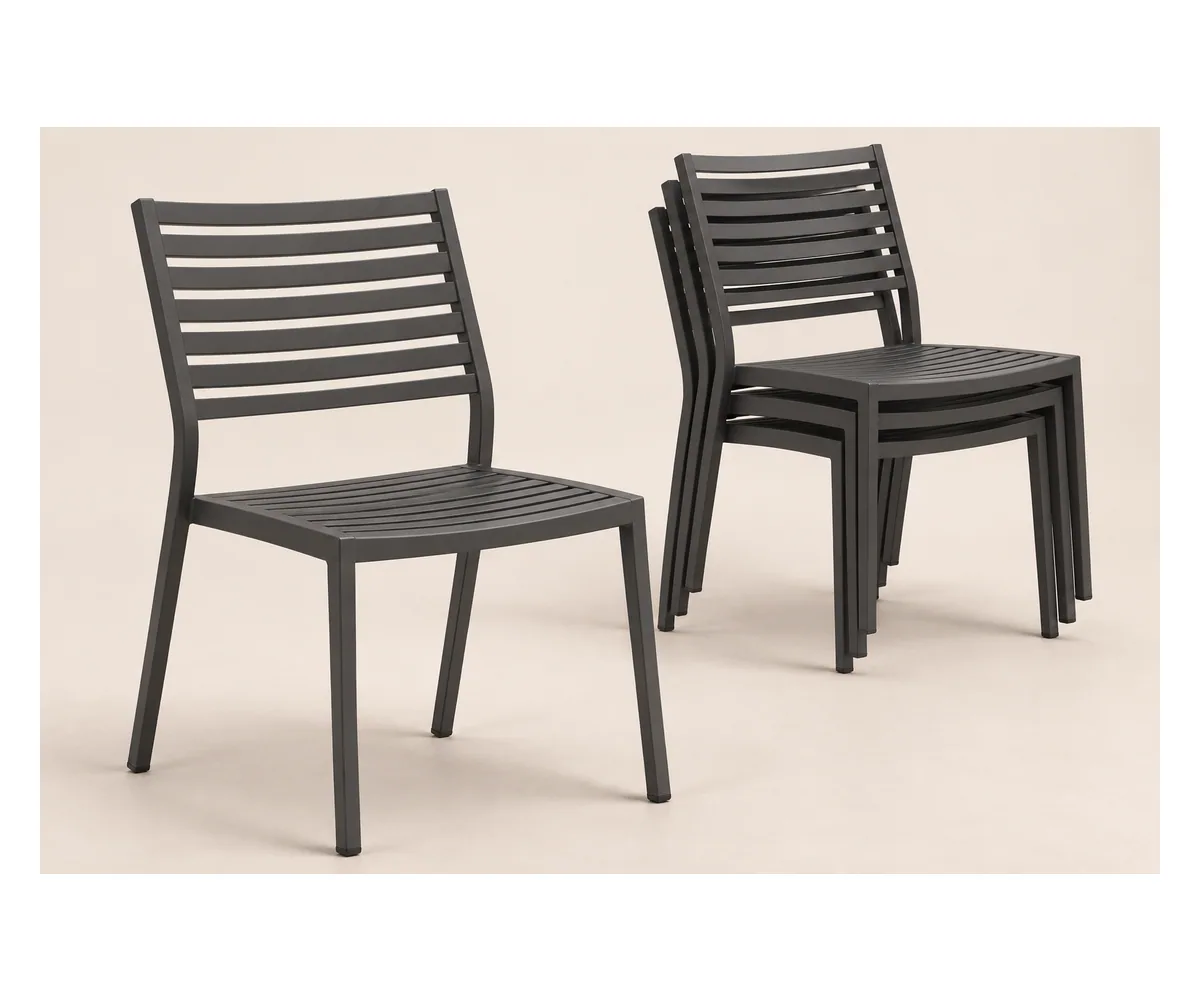 Stackable Aluminum Slat Outdoor Dining Chair