1200 mm Main Headrail
The main configuration is 1200 mm wide overall at the headrail, paired with an 1800 mm finished fabric drop. The fabric width follows the matching headrail hardware deductions.
Cordless Roman Shades with Sewn Batten Pockets
Warm-ivory woven polyester provides the linen-like face texture. A separate cotton-polyester lining forms the rear textile layer, with both fabrics retained on the assembled shade sample.
Horizontal pockets carry the battens that organize the fabric into folding tiers. The lower hem weight, pocket seams and lining attachment stay together on the shade fabrication reference.
A matched spring-lift headrail raises and lowers the shade from its lower operating edge. Rear lifting cords run within lift sleeves, with the complete mechanism balanced to the finished fabric, battens and hem weight.

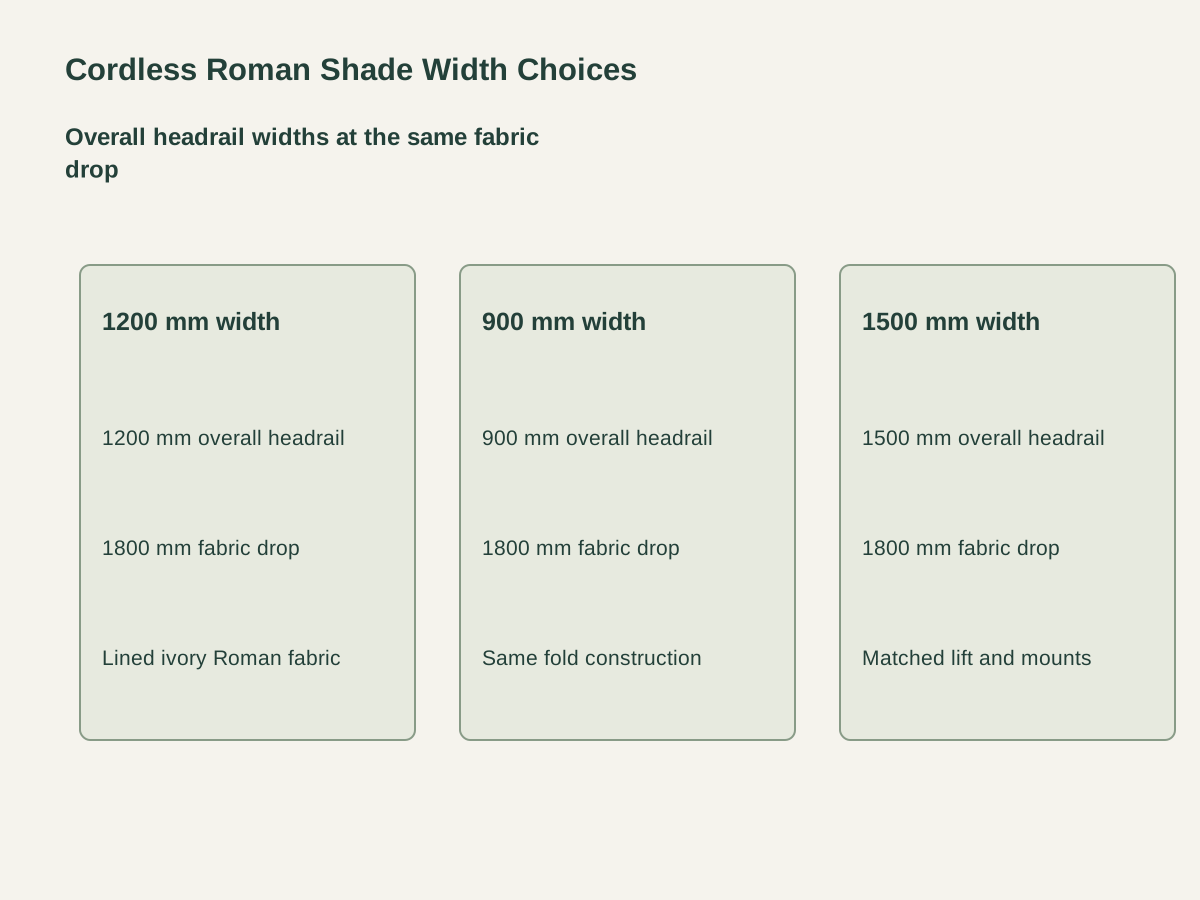
The main configuration is 1200 mm wide overall at the headrail, paired with an 1800 mm finished fabric drop. The fabric width follows the matching headrail hardware deductions.
The narrower unit uses a 900 mm overall headrail width. Its lined textile, batten-pocket construction and 1800 mm fabric drop remain within the same coordinated assembly.
The 1500 mm version widens the shade while keeping the 1800 mm fabric drop. The lift mechanism and mounts are matched to that complete finished shade.
| Shade construction | Linen-look polyester face with separate cotton-polyester lining |
|---|---|
| Overall headrail width | 1200 mm overall headrail width · 1800 mm fabric drop |
| Finished fabric drop | 1800 mm from headrail underside to lower hem |
| Horizontal fold structure | Sewn batten pockets and weighted lower hem |
| Lift assembly | Matched enclosed cordless spring-lift headrail |
| Rear lifting arrangement | Lift cords enclosed in rear lift sleeves |
| Mounting and coverage | Bracket/substrate detail and fabric-width deductions matched to headrail |
| Supply unit | One lined shade with headrail, lift sleeves, battens, hem weight and mounting brackets |
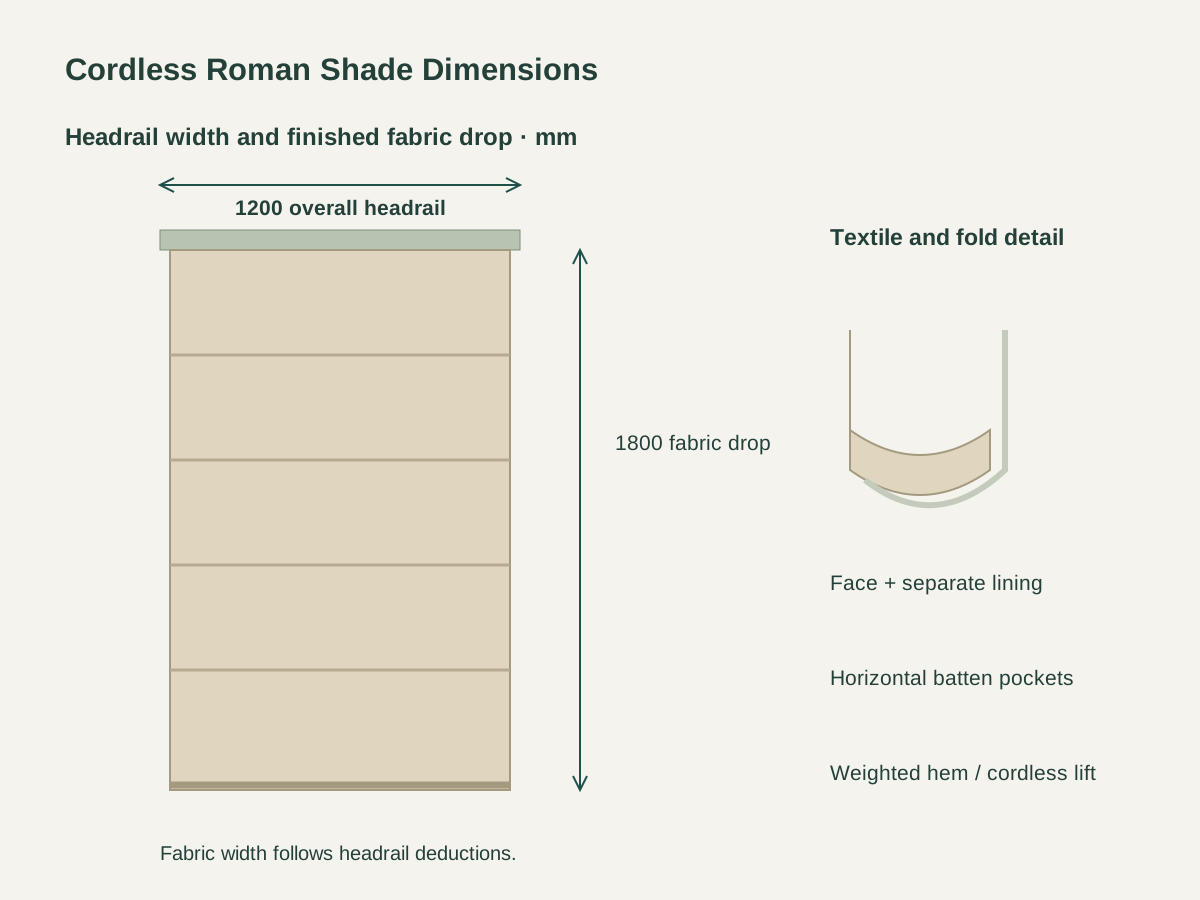 Open product drawing ↗
The opening schedule distinguishes overall headrail width from fabric coverage. Recess dimensions, trim, handles, supporting substrate and the intended inside/outside mounting position establish the bracket locations.
The window elevation shows the raised fabric stack relative to the glazing and opening handles. The pocket layout, fold projection and operating reach are coordinated with the actual shade assembly.
Spring mechanism, lift sleeves, battens, hem weight and headrail stay on one assembly reference. The fitted sample establishes operating balance and reach with the chosen textile package.
List 900, 1200 or 1500 mm overall headrail widths and the 1800 mm fabric drop by opening. Record mounting position, room references and quantities together.
Quote the linen-look polyester face, cotton-polyester lining and sewn batten pockets. The ivory sample, seam direction, lower hem and textile requirements remain on the fabrication line.
Itemize the spring-lift headrail, enclosed lift sleeves, battens, weighted hem and mounting brackets. The supporting surface and installation work are each assigned.
Protect the fabric folds and headrail finish during packing. Opening labels pair shades and brackets, with assembled-piece dimensions, handling requirements and destination on the delivery schedule.
Battens in horizontal sewn pockets organize the lined fabric into broad tiers as the lower edge rises. The hem weight and pocket layout stay with the complete shade reference.
The overall headrail widths are 900, 1200 and 1500 mm. Each is paired with the configured 1800 mm fabric drop.
Measure from the underside of the headrail to the lower fabric hem at the finished-drop position. The configured drop is 1800 mm.
The face layer is warm-ivory linen-look polyester. A separate cotton-polyester lining forms the rear layer, with seams and pocket attachment retained on the assembled sample.
The headrail spring mechanism, rear enclosed lift sleeves, battens and weighted hem are matched to the finished shade. The fitted sample establishes balance, lower-edge operation and reach.
Include opening dimensions, mounting position, headrail width, fabric drop and room count. Add fabric/lining references, handle and raised-fold clearances, bracket substrate, installation responsibilities and destination.
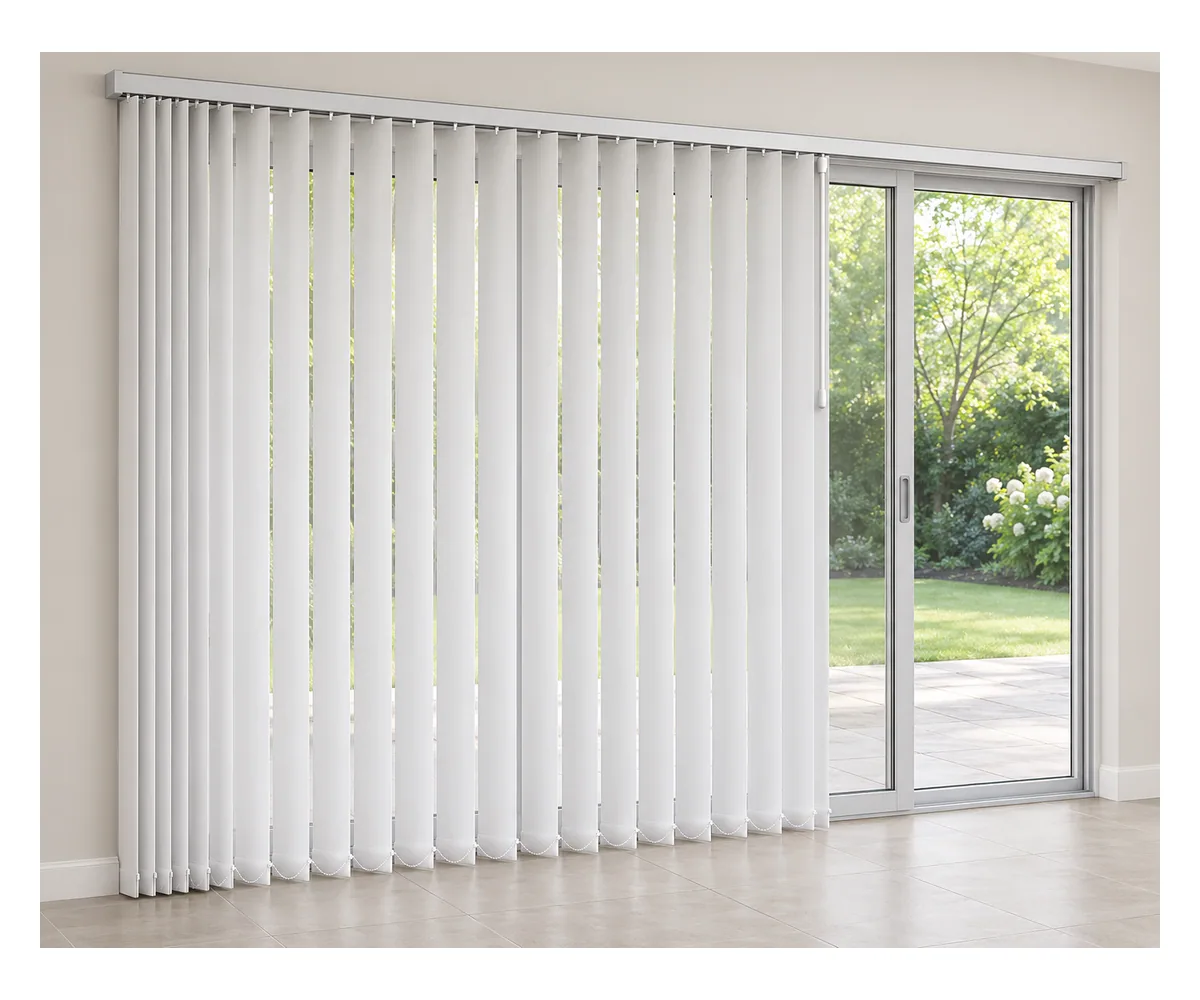 Wand-Operated Vertical Blinds for Sliding Glass Doors
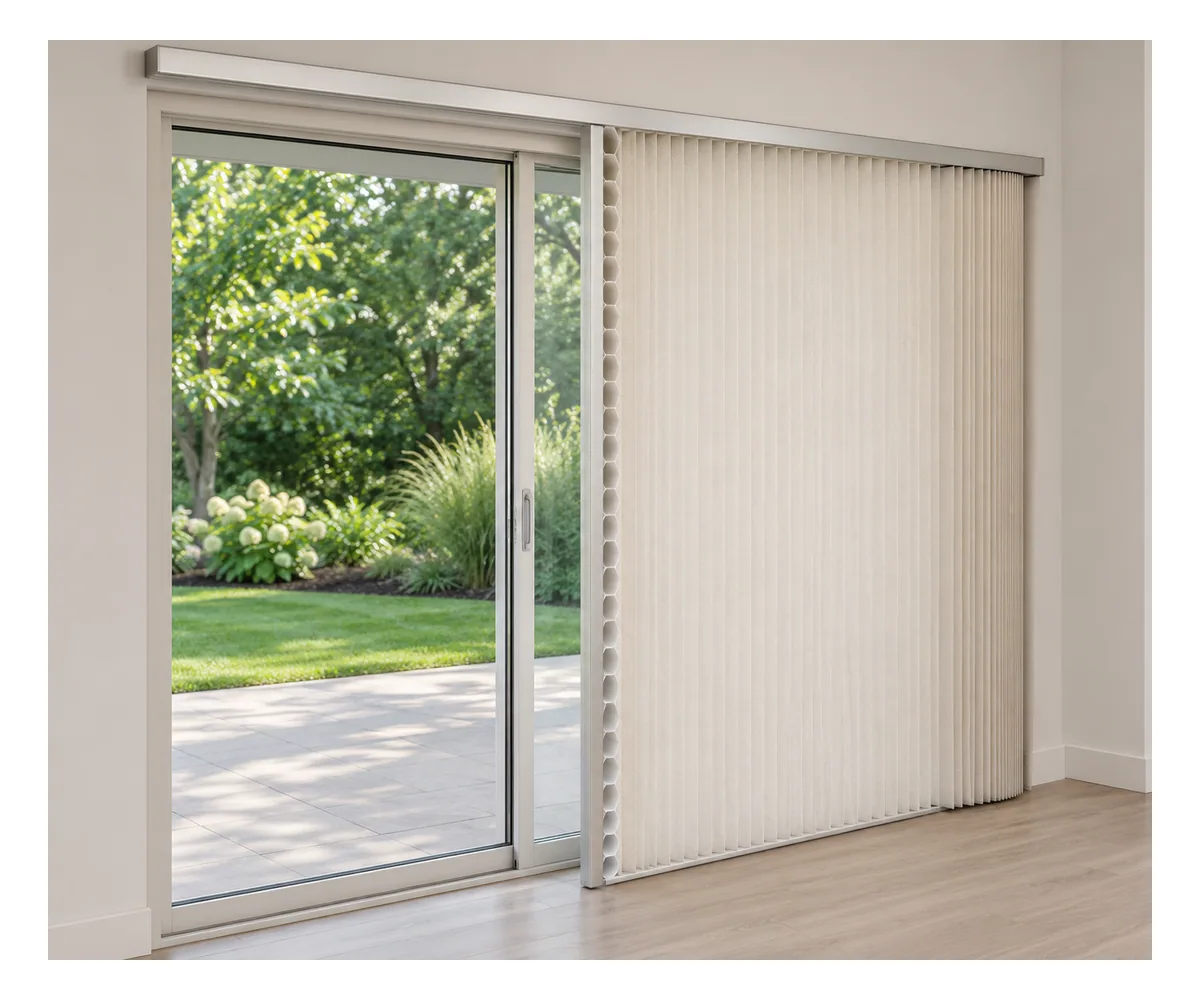 Side-Gliding Cellular Shades for Sliding Glass Doors
 Cordless Aluminum Venetian Blinds with Tilt Wands
 Custom Roller Shades for Sliding Glass Doors