Light-Filtering Ivory
The default fabric is light-filtering ivory cellular polyester. The selected face and translucency are reviewed on the accepted textile sample, keeping the fabric appearance separate from the white metal tracks.
Side-Gliding Cellular Shades for Sliding Glass Doors
The selected fabric has repeated vertical honeycomb cells with a 38 mm nominal cell-profile span. The cellular textile gathers horizontally, creating a different construction from separate rigid vertical-blind vanes or a flat curtain.
A rigid leading bar moves the fabric along the selected track arrangement. The shade gathers to the right for door access, with the leading-bar connection and fabric attachments retained on the same assembly reference.
The selected system includes a white aluminum headrail and lower guide. Rail supports, guide position, end components and the gathered stack are coordinated with the actual sliding-door opening and threshold detail.
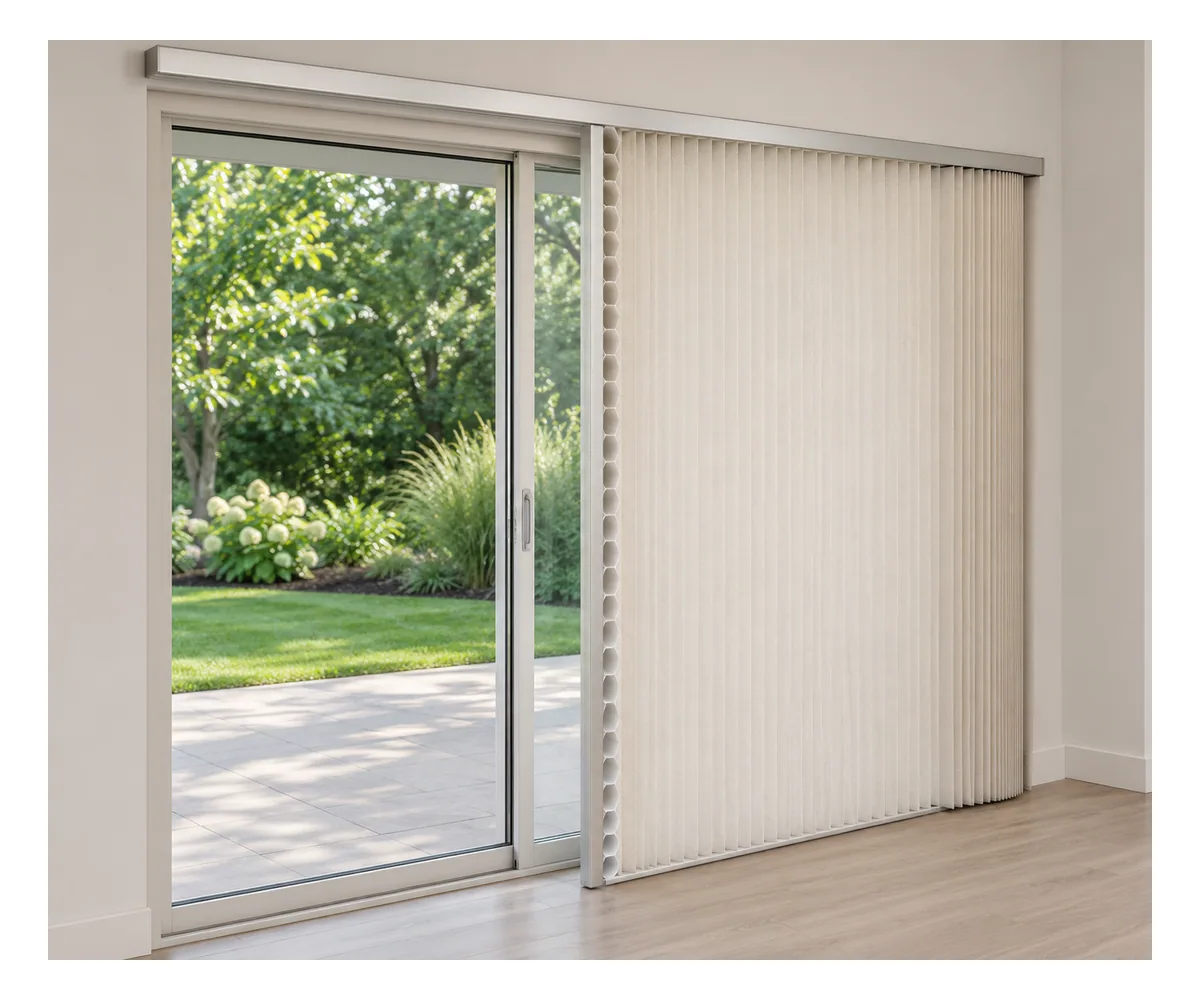
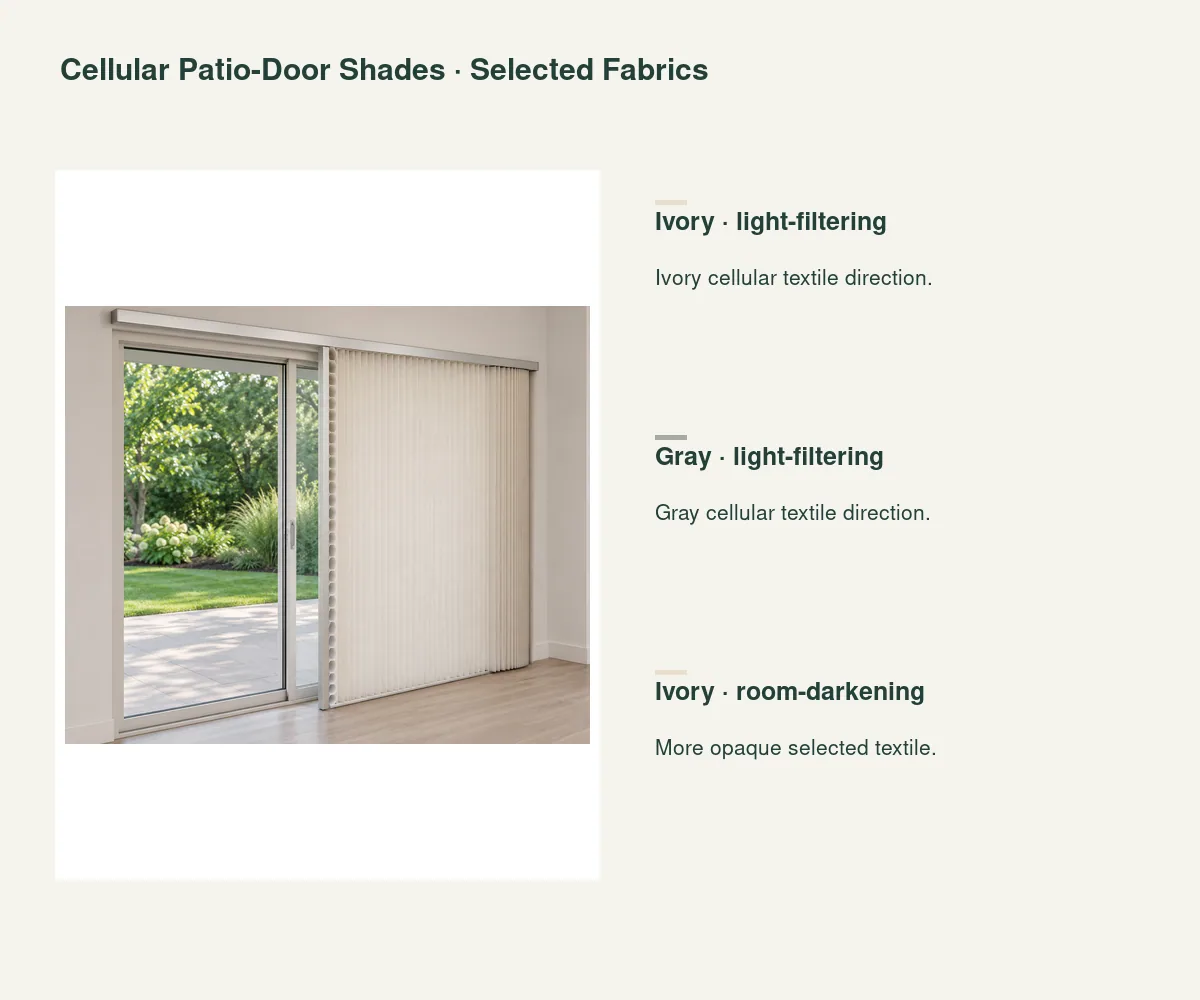
The default fabric is light-filtering ivory cellular polyester. The selected face and translucency are reviewed on the accepted textile sample, keeping the fabric appearance separate from the white metal tracks.
The gray option changes the selected fabric color while retaining the same nominal cell profile and manual side-gliding operation. Its accepted sample defines both the room-side appearance and light-filtering direction.
The room-darkening ivory option selects a more opaque cellular fabric on the same track concept.
| Selected shade system | Vertically oriented cellular polyester fabric; manual side-gliding operation |
|---|---|
| Selected fabric | Light-filtering ivory cellular fabric · manual side glide |
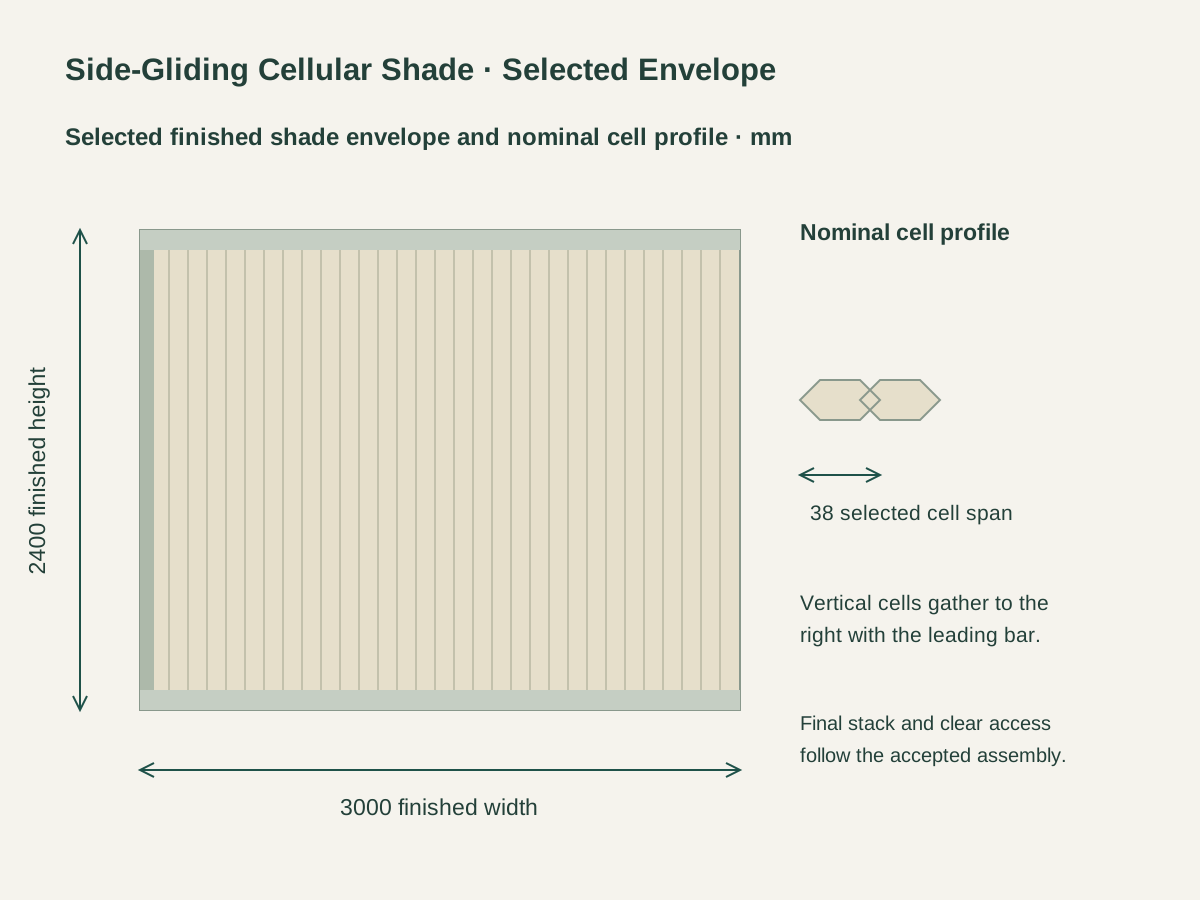
| Selected finished shade size | 3000 W × 2400 H mm; actual opening/overlap recorded on the elevation |
| Selected nominal cell profile | 38 mm cell span; final fabric profile matched to accepted sample |
| Selected track components | White aluminum headrail and lower guide |
| Selected operation and stack | Manual leading bar; fabric gathers to right side |
| Fabric alternatives | Light-filtering gray or room-darkening ivory on matched track/fabric assemblies |
| Site and performance | Actual stack/access dimensions, threshold/guide detail, supports and any required opacity/thermal/fire documents matched to final assembly |
| Standards & certificates | Matched to the ordered model: tell us the standards or certificates your market or project requires, and we confirm in writing which documents are available for this configuration before you order. |
 Open product drawing ↗
The selected finished envelope is 3000 mm wide × 2400 mm high. Record the actual door opening, mounting position and desired overlap as their own dimensions so the finished textile and track dimensions remain tied to the elevation.
The compressed fabric and leading bar occupy space at the right side. Place that stack in relation to the active door leaf, handles and access route, using the actual accepted stack dimensions for the selected fabric and track.
Show the lower guide against the real threshold and finished floor. Its fixings, access clearance and relationship to the moving glass door belong to the site detail, with headrail supports selected for the actual wall or ceiling substrate.
Quote complete shades by the selected finished envelope, operation and unit count. Keep actual opening dimensions, overlap and room references with the same shade schedule.
Identify the ivory or gray light-filtering fabric, or the ivory room-darkening fabric, with the selected nominal cell profile. Separate replacement textile or leading-bar components from complete shade quantities.
List the headrail, lower guide, leading bar, end components and mounting supports together. Substrate fixings and installation are separate items unless specifically included in the quotation.
Retain the accepted fabric and gathered-stack reference with the order. Add any required thermal, fire or other product documents, room labels, protective packing, destination and delivery stages for the actual selected assembly.
The selected cellular fabric has connected honeycomb cells that compress horizontally with a leading bar. It does not use individual rigid rotating vanes or bottom connecting chains.
The choices are light-filtering ivory, light-filtering gray and room-darkening ivory cellular polyester. Each uses the selected nominal 38 mm cell profile and a compatible manual side-gliding track assembly.
Room-darkening cellular fabric blocks most daylight through the shade itself. For near-blackout results we add side channels and a head box that close the light gaps at the edges, which is the option to choose for bedrooms and media rooms.
The selected shade gathers to the right. Its actual compressed stack and leading bar need to be positioned beside the active door leaf so the remaining access route meets the project layout.
They are the selected finished shade dimensions. Actual opening size, mounting position, overlap and threshold/guide interfaces are recorded on the site elevation.
Any required thermal performance must identify the actual fabric, cell construction, track and complete installation assembly.
 Cordless Aluminum Venetian Blinds with Tilt Wands
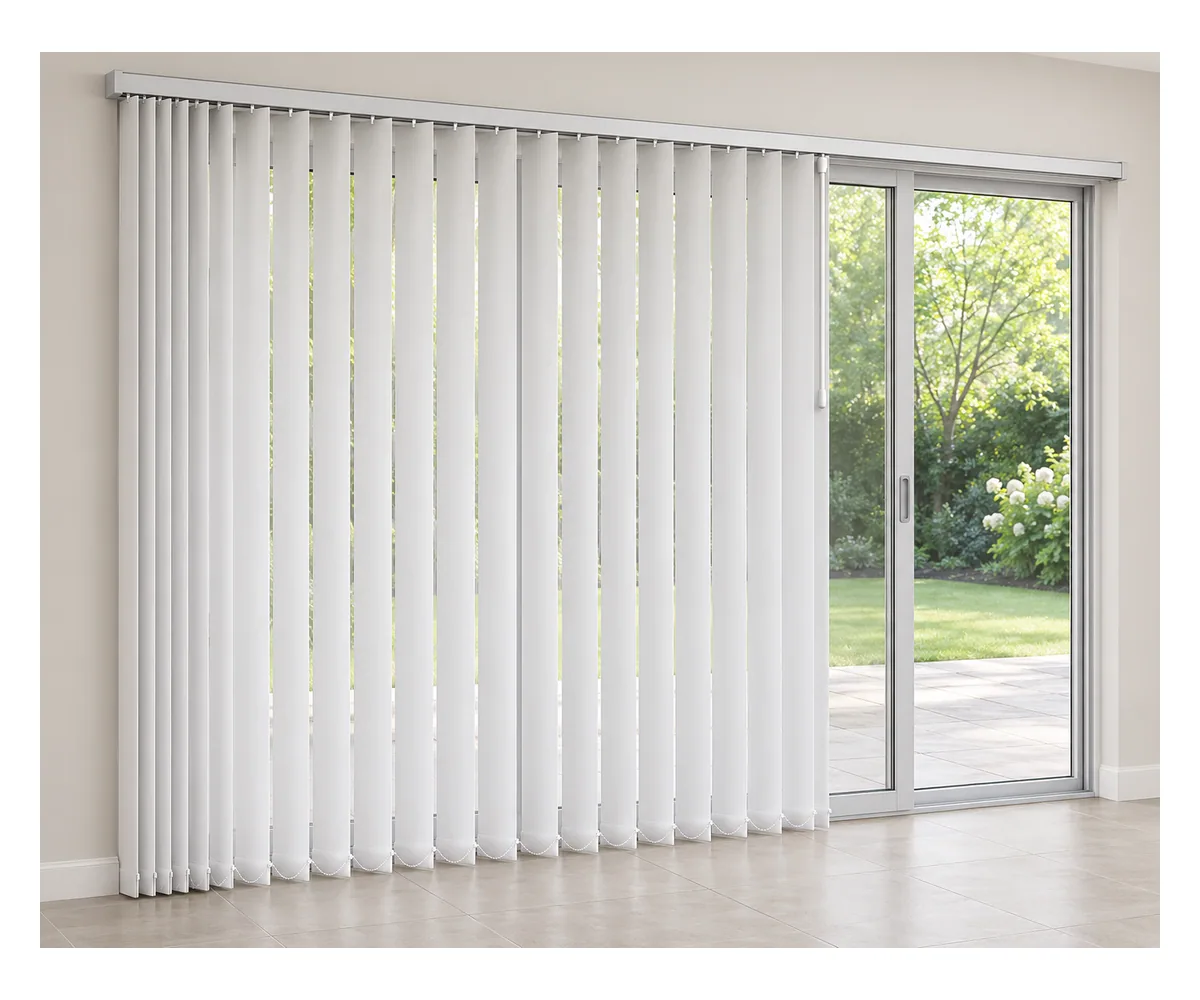 Wand-Operated Vertical Blinds for Sliding Glass Doors
 Custom Roller Shades for Sliding Glass Doors
 Cordless Roman Shades with Sewn Batten Pockets