On this page
Choose Gola rails when a continuous recessed grip suits the cabinet layout; choose finger pulls when you want the grip built into each front; choose push-to-open when an uninterrupted slab face matters most and you can specify the complete opening system. For a working kitchen, the best result may combine all three. Select by the action at each cabinet, then coordinate the appearance.
For project buyers comparing handleless kitchen cabinets, a rendering is not enough to order from. Similar flat fronts can conceal different cabinet cutouts, hinge requirements and opening mechanisms. This guide turns those differences into a selection schedule for doors, drawers and appliance panels.
First identify what the hand actually operates
- Gola rail: a profile fitted to the cabinet structure creates a recess behind the front edge. You reach into that space and pull the door or drawer front. The rail stays with the cabinet.
- Finger pull: the front itself provides the grip, such as a routed J-profile or a shaped edge. The grip moves with the front. Here, “finger pull” means an integral front detail; a small attached edge handle needs its own specification.
- Push-to-open: pressing the face triggers a mechanism that releases or moves the front outward. A door catch, an integrated drawer mechanism and an appliance opening system are different products.
“Handleless” therefore describes an appearance, not a complete construction specification. Ask for a section through the proposed grip or opening mechanism before approving the elevation. Scilm’s Gola range, for example, includes profile forms with defined cabinet cuts; Howdens describes its J-pull fronts as having an integrated handgrip. Those are physically different ways to remove a projecting handle.
The recessed rail stays with the cabinet while the plain drawer front moves. Use the project’s approved section to confirm grip clearance and internal layout.
Compare the three options on the same terms
These are selection trade-offs, not test rankings. The particular front, profile, hinge or runner can change the outcome. On a narrow screen, scroll the table sideways to compare all three systems.
| Decision | Gola rail | Integral finger pull | Push-to-open |
|---|---|---|---|
| Opening action | Reach behind the front and pull. | Grip the shaped front edge and pull. | Press a usable area of the face to trigger release. |
| Visible detail | A continuous recessed line, often with a visible profile finish. | A shaped edge or groove on each front. | A flat face without a grip detail; working gaps still remain. |
| Space to resolve | Profile section, cabinet cuts, grip clearance and rail ends. | Finger space, front thickness, groove shape and adjacent surfaces. | Front travel, mechanism clearance and the specified front gap. |
| Closing choice | Pulling action can be paired with suitable soft-close hinges or runners. | Pulling action can be paired with suitable soft-close hinges or runners. | Depends on the complete system; press-to-close and integrated soft-close versions differ. |
| Cleaning contact | Fingers contact the back or edge of the front; the recess needs access for wiping. | Fingers repeatedly contact the shaped edge; inspect its finish and cleanability. | Hands press the visible face; evaluate marks on the actual finish. |
| What the quote must identify | Profiles, finish, fixings, ends, corner details and machining. | Front construction, finished grip section and matching edge treatment. | Mechanism, compatible hinge or runner, adjustment and any required synchronization. |
| Prefer it when | A continuous grip line works across frequently used base units. | A reachable edge gives comfortable purchase without a carcass-mounted rail. | A plain face is the priority and the loaded operating trial is satisfactory. |

Where each option earns its place
Gola: a strong starting point for a coordinated base run
For cooking drawers that are opened repeatedly, a continuous channel provides a clear place to pull. It also lets the designer carry one profile finish across several cabinets. Choose it when the cabinet maker can detail the entire run, including end panels, changes in direction and appliance interruptions.
Do not approve the rail from its color sample alone. Review the section with the countertop overhang, front thickness and internal drawer arrangement in place. The recess occupies space in the cabinet design; ask the supplier to show the resulting usable opening and storage arrangement rather than assuming a standard loss of height. Reject a proposal if the finished grip is too cramped in the mock-up, even when the elevation looks clean.
Finger pulls: useful when the grip belongs to the front
An integral finger pull can suit a wall cabinet with an accessible lower edge or a drawer front with a comfortable upper groove. It avoids specifying a continuous Gola rail, but it still needs a deliberate grip section. A shallow bevel and a deep J-profile do not feel the same.
Request a finished sample in the actual front material. Check whether fingers can engage the edge without relying on fingernails, and whether a light fitting, countertop or adjacent front blocks the approach. Inspect the finish inside the groove as well as on the face. If the desired profile cannot be produced and finished consistently in the chosen construction, change the front detail or the opening method.
Push-to-open: select the mechanism before freezing the front
Push-to-open is a useful choice for a plain occasional-use cupboard or an uninterrupted bank of drawers, provided the trigger position and closing action suit the user. Check opening with the intended contents and from the positions where someone will actually stand. A decorative front that opens reliably in an empty display is not a completed project check.
Also simulate standing against the base run, wiping the fronts and working at the counter. Record whether unwanted releases occur with the proposed installation.If the action does not suit that location, a positive grip may be the better choice.
Doors, drawers and appliances need different decisions
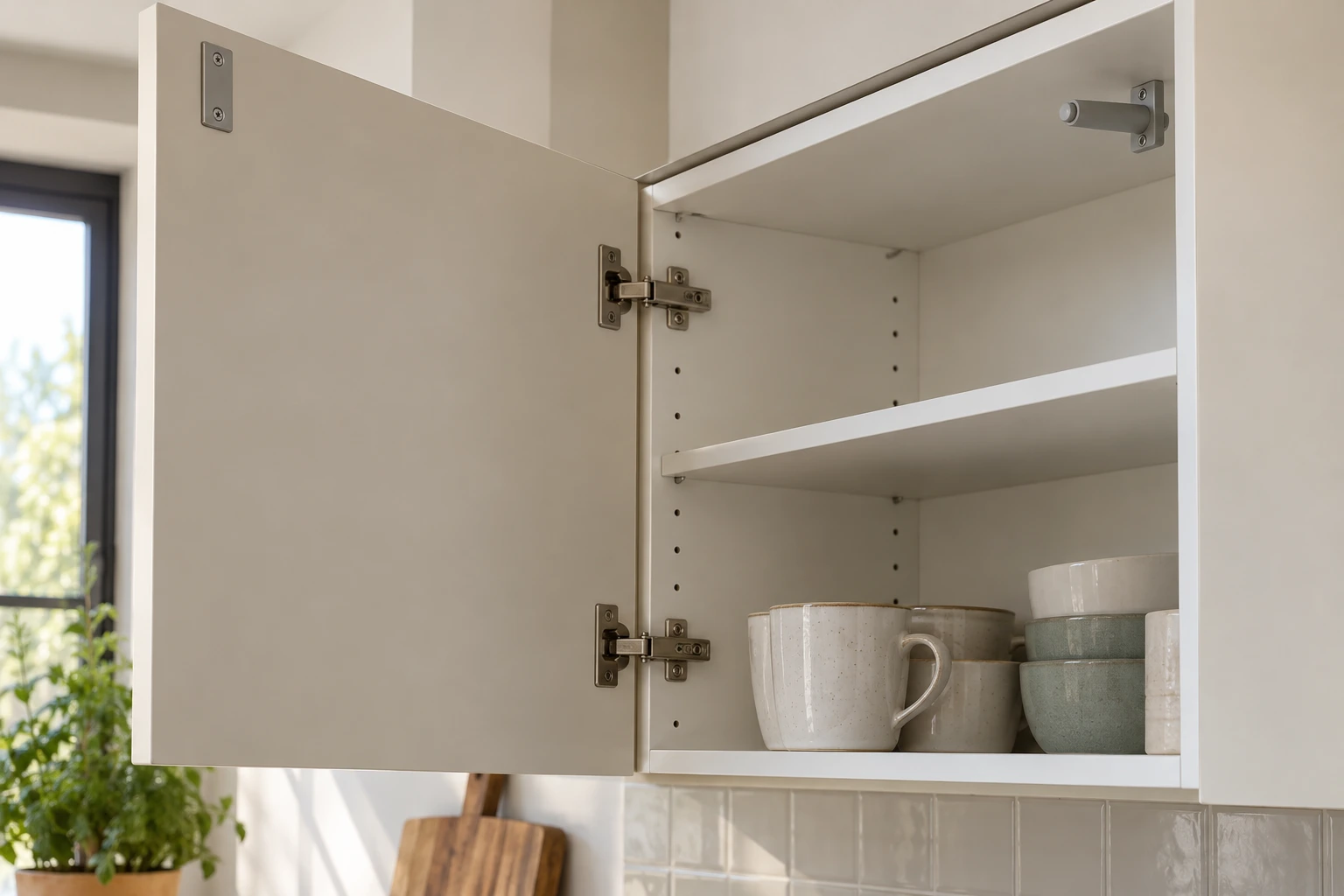
For hinged doors, specify the opening device together with the hinge and closing behavior. Blum’s TIP-ON for doors is a mechanical system that opens by touch and closes by pressing shut; its cited configuration uses an unsprung CLIP top hinge. That does not establish that an arbitrary catch will work with an existing soft-close hinge.
For drawers, do not write “push-to-open cannot have soft-close.” Blum’s TIP-ON BLUMOTION combines mechanical opening with soft closing and is offered for named drawer and runner systems, including MERIVOBOX. Its MERIVOBOX selection information distinguishes units by nominal length and weight range and recommends synchronization to extend the trigger range. Specify the selected system’s component combination and loading basis; do not transplant its gap or load values into another product.
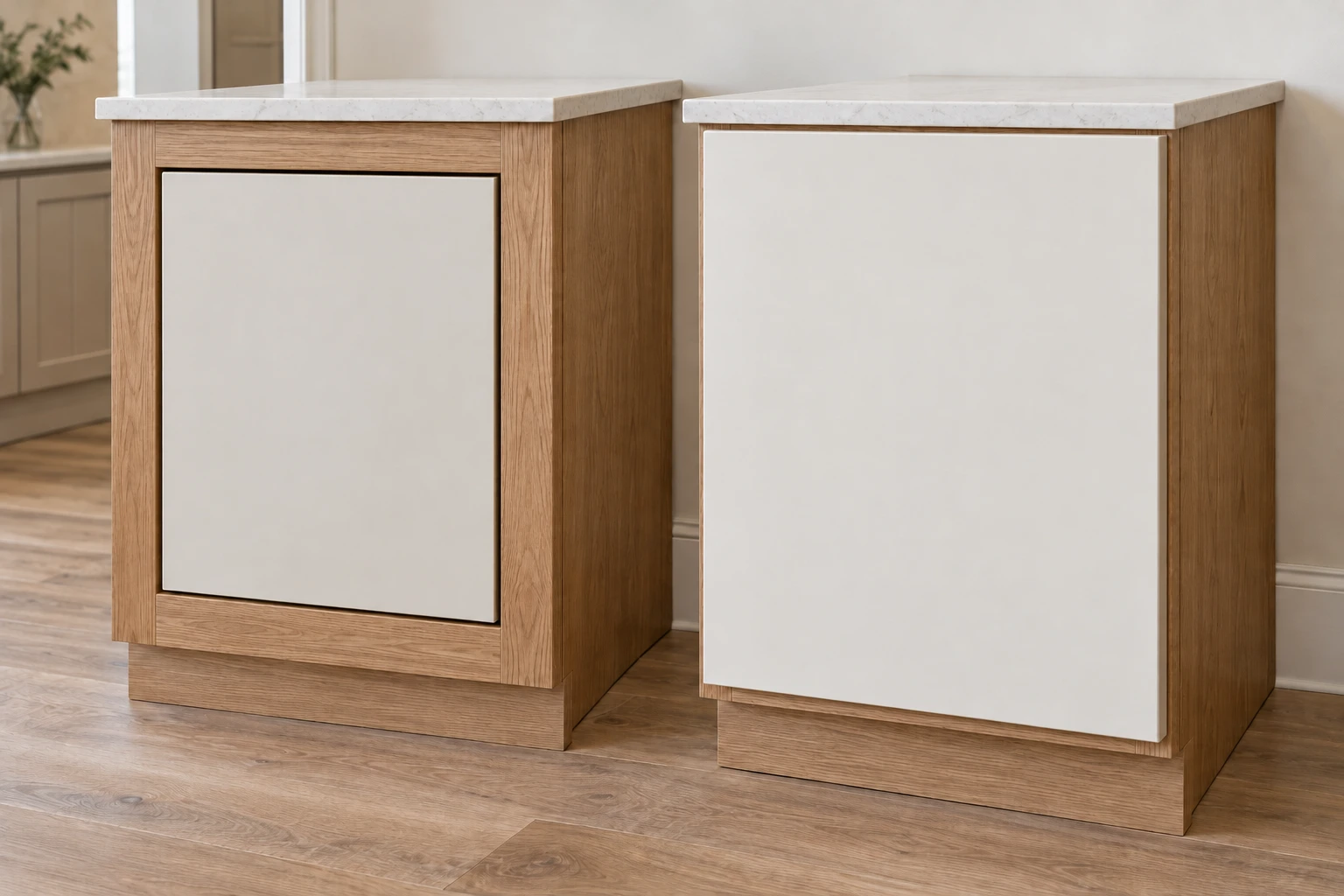
For an integrated dishwasher or refrigerator, start with the exact appliance model and its installation instructions. A matching furniture panel does not make the appliance equivalent to an ordinary cabinet door. The permitted panel dimensions and weight, hinge movement, ventilation and approved opening method must be coordinated.
Miele identifies Knock2open dishwashers as suitable for handleless kitchen designs. That is a named appliance capability, not a promise that every fully integrated dishwasher opens when pressed. Do not specify a general cabinet spring catch as the appliance solution. Where an appliance is to be pulled through a recessed grip, confirm that arrangement with its installation requirements; where it uses a dedicated opening system, specify that system. Automatic door opening during drying is not proof of a user-triggered handleless opening function.
A filled selection record for a mixed kitchen
The following is a quotation-stage decision for an apartment kitchen: everyday cooking drawers, wall cupboards above the preparation counter, an occasional-use tall cupboard and a concealed dishwasher. It is not a documented NOVARMIA project. The selections are concrete, while the last column identifies what must be resolved before manufacture.
| Location and use | Selected opening | Reason for this choice | Production release evidence |
|---|---|---|---|
| B01: cookware drawer stack | Gola grip with compatible soft-close runners | Buyer wants a direct grip for daily access and a continuous base-run line. | Approved rail/front/counter section, drawer arrangement and comfortable loaded pull trial. |
| W01: hinged wall cupboard | Integral finger pull on the lower front edge | Grip can be reached from below without continuing a base-cabinet rail. | Finished edge sample and confirmation that the light fitting leaves the grip accessible. |
| T01: occasional-use tall cupboard door | Mechanical push opening with its specified hinge package | Plain face is the buyer’s priority at this location. | Door-size application check, identified mechanism/hinge combination and demonstrated press-to-close action. |
| A01: integrated dishwasher | Appliance with a manufacturer-supported handleless opening function | Maintains the plain panel without assuming a cabinet catch can open the appliance. | Hold panel manufacture until the exact model, opening instructions and panel limits are approved. |
This schedule is usable for obtaining a coordinated proposal: B01, W01 and T01 describe the desired operation; A01 exposes an appliance selection dependency instead of hiding it in “handleless throughout.” If the buyer changes the dishwasher model, review A01 again before releasing its panel.
For B01, a useful quotation line is: “Provide the Gola grip assembly for the cookware drawer stack, including profiles, finish, fixings, end treatments and cabinet machining. Show the proposed section with countertop and drawer fronts. Identify the compatible soft-close runner package and confirm the resulting internal arrangement.”
Compare the complete scope, not just a price per rail or catch. Front machining, profile terminations, runner options and installation adjustment can move costs between line items. There is no universal cheapest method without the same cabinet layout and closing requirement. Put the selected opening schedule alongside the broader kitchen cabinet RFQ specifications.

Approve the opening action before the whole kitchen
- Review a section and component list. Locate the grip or trigger, front movement, adjacent surface and relevant opening device.
- Use a representative assembled sample. Include the actual front finish, intended contents and nearby countertop or lighting that affects access.
- Try the full routine. Open, retrieve, close, wipe and work beside it. Note grip comfort, closing behavior, missed triggers and any unintended openings.
- Record the accepted combination. Identify the front detail, opening components, approved adjustments and appliance model where applicable. An appearance-only approval leaves the operation unresolved.
The best handleless option is the one that passes this location-specific check while delivering the intended appearance. A mixed schedule is often a sensible design proposal; confirm it on the elevation so changes between grip lines and plain faces look intentional.
Questions buyers ask before committing
Can an existing kitchen be converted to handleless fronts?
Sometimes, but review the existing box, fronts and hardware first. Adding a Gola channel can require cabinet alterations; routing a finger pull depends on the front construction and finish. A push device also needs compatible movement and closing behavior. Price the actual conversion after a site survey, including how existing handle holes will be resolved.
Will handleless cabinets still open during a power cut?
A manual Gola grip, integral finger pull and purely mechanical push system do not need electricity for their opening action. Powered opening systems are a separate category. For an electrically assisted appliance or cabinet, obtain the model’s manual-opening instructions and demonstrate that procedure at handover.
Is push-to-open automatically easier for someone with limited grip?
No single label establishes usability. A press may reduce the need to grip an edge, but trigger position, force, reach and the next opening movement still matter. Let the intended user try the assembled options. Do not treat a showroom demonstration as proof of accessibility compliance for a project.
What should the maintenance handover include?
Provide opening-system identifiers, matching hinge or runner details, the supplier’s adjustment instructions and the appliance operating manuals. Include a photograph locating any concealed release device. This helps a maintenance team identify the installed combination before ordering replacements or changing settings.
Planning a handleless kitchen package? Send NOVARMIA the cabinet elevation, door and drawer schedule, proposed front material, appliance model list and preferred opening action for each location. Include quantities and destination. These inputs support a discussion of the grip sections, compatible opening scope and documents needed for a comparable proposal.