On this page
EXW gives a building-materials buyer more direct control over collection and the origin transport arrangements, provided it can manage the associated responsibilities. FOB lets the buyer retain control of the nominated vessel and main sea carriage while the seller handles export and delivery onto that vessel. Choose the control you need at a workable delivery point: taking responsibility earlier also means taking cargo risk earlier under the normal delivery sequence.
This comparison uses Incoterms® 2020. ICC’s current Digital Library offering still identifies that edition as the latest when checked on October 30, 2026. Write the rule, named place or port, precise point and edition into the transaction record. “EXW China” or “FOB China” leaves too much unspecified.
At the dispatch bay: decide whether delivery should already have happened
Under EXW, the normal delivery event is the seller making the goods available to the buyer at the agreed location, without loading them onto the collecting vehicle. The seller does not undertake export clearance under that rule. The buyer must establish who can actually arrange collection, loading and the applicable export formalities, rather than assume an overseas buyer can complete them merely because the quotation says EXW.
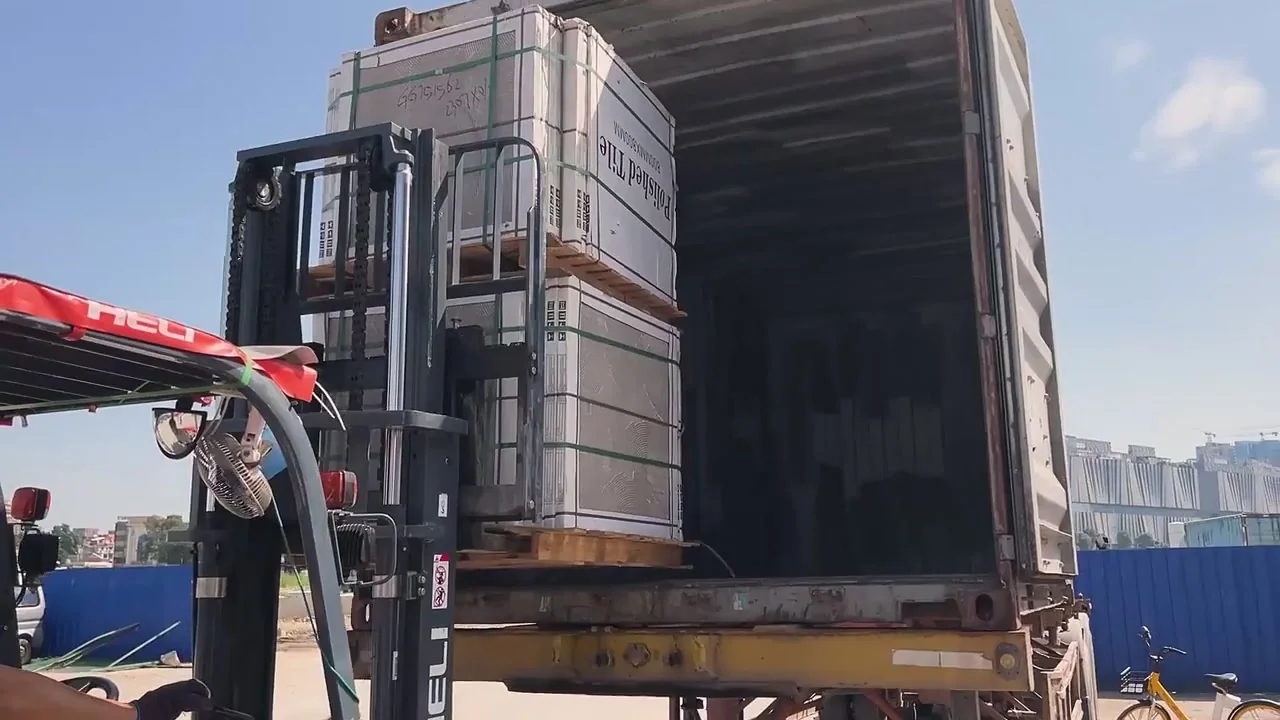
Specify the dispatch point inside the site and the collection arrangements. If the seller uses its forklift to help load, that physical assistance does not automatically move the EXW risk boundary to the end of loading. Agree the loading-risk arrangement beforehand. Where seller loading and export clearance are intended, ICC’s guidance points buyers toward considering FCA instead of stretching the EXW label.
That is the practical price of EXW’s origin-side control: the buyer needs an executable service chain from the named point. A low factory collection price is incomplete if nobody has accepted loading, export and port delivery work. EXW does not remove the seller’s underlying goods, packing and other agreed sale obligations.
At the ship: FOB preserves the buyer’s sea-carriage choice
FOB applies to sea or inland-waterway transport with delivery onto the buyer-nominated vessel at the named shipment port. The seller handles applicable export formalities. In the normal performance sequence, cargo risk changes sides when the goods have been placed aboard; the buyer arranges the main carriage. The buyer must communicate the vessel and loading information in time for the seller to perform.
Do not substitute “arrived at port,” a terminal receipt or a photograph beside the vessel for that delivery event. Those records can establish an earlier custody step, but they do not by themselves establish FOB delivery. The ICC checklist and flowcharts distinguishes EXW, direct-onboard FOB and carrier-delivery alternatives when selecting a rule.
Normal delivery is not the only relevant provision. Buyer notice failures or a nominated vessel failing to arrive or take cargo can trigger different risk consequences for identified contract goods. Keep the applicable exceptions and notices in view, rather than reading “FOB” as an unconditional promise that the seller carries every risk until a successful loading.
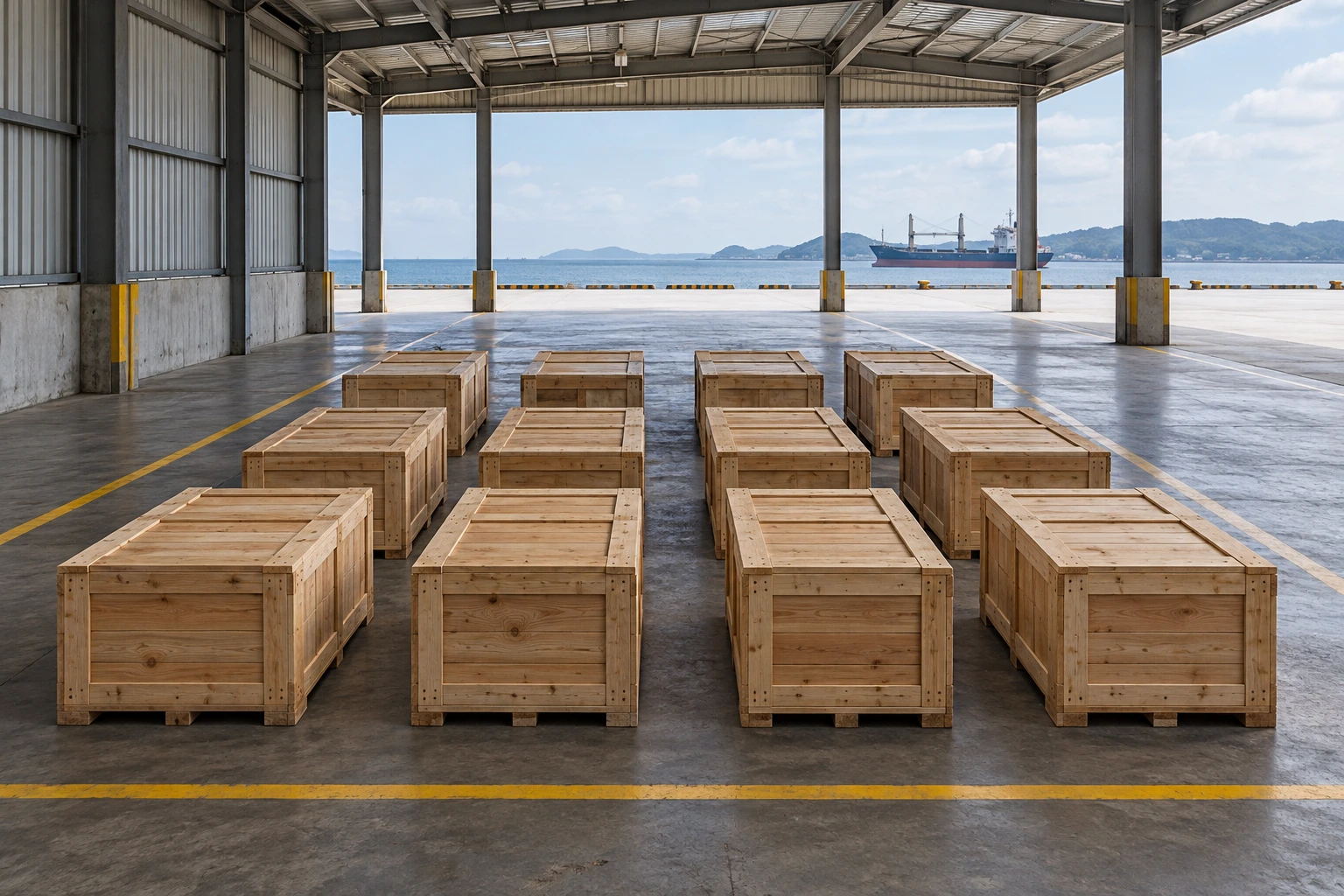
Arrival on the quay and delivery on board are different events.
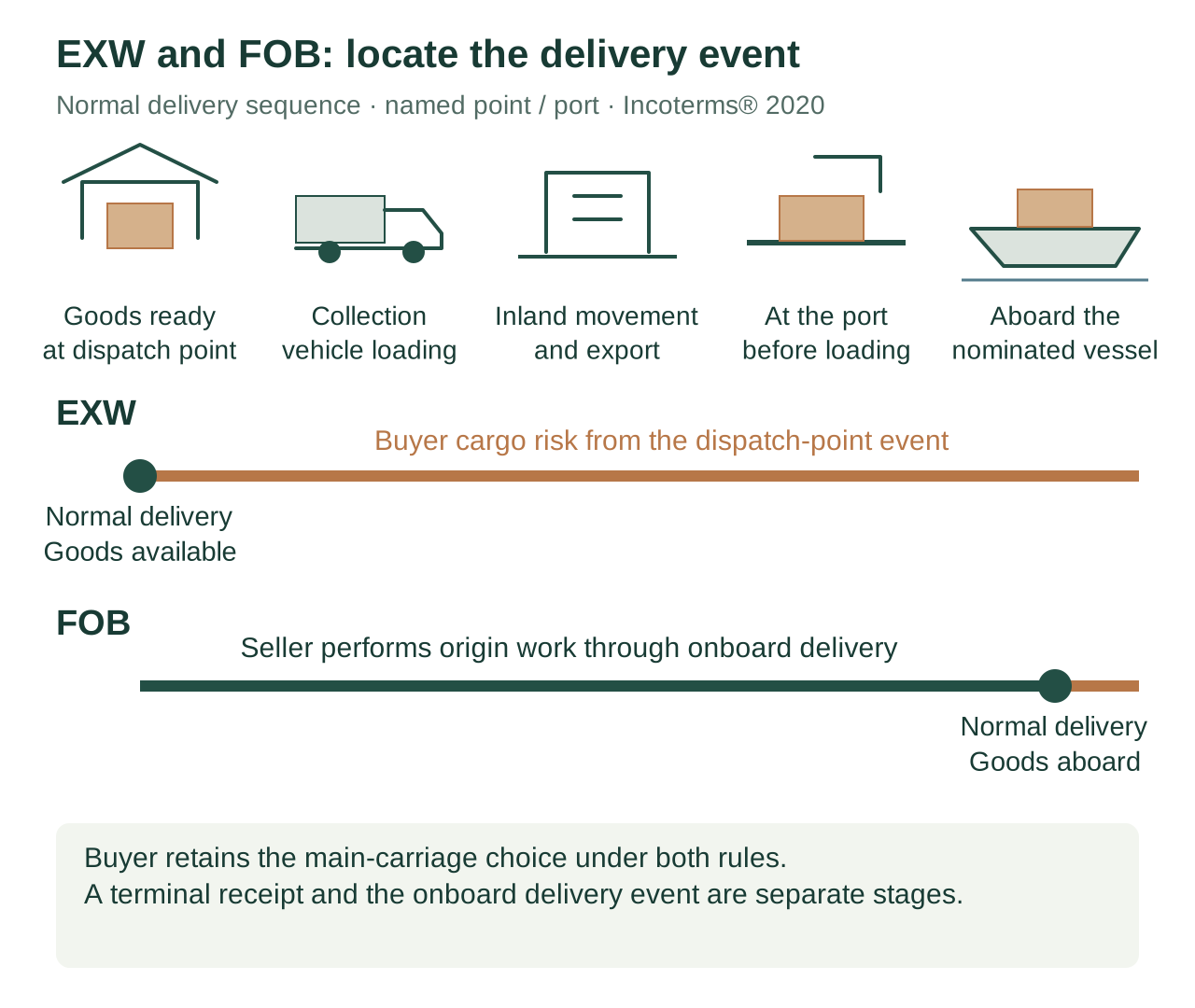
Map the same consignment from seller pickup to onboard delivery
The following matrix assumes ordinary performance, identified contract goods and no separately agreed variation. It separates who arranges the work from the normal cargo-risk position. Actual transport contracts, port invoices and any exceptions still need reconciliation.
| Event / task | EXW named dispatch point, Incoterms® 2020 | FOB named shipment port, Incoterms® 2020 |
|---|---|---|
| Goods made available | Normal delivery at the agreed point before vehicle loading; buyer’s cargo risk begins there. | Readiness at the factory is an intermediate step, not normal FOB delivery. |
| Collecting-vehicle loading | Buyer arranges it. If seller assists, agree the risk treatment explicitly. | Seller arranges the origin work needed to complete its onboard delivery. |
| Inland movement to port | Buyer organizes the service chain after EXW delivery. | Seller organizes movement to achieve the agreed vessel delivery. |
| Export formalities | Buyer responsibility, with the seller’s prescribed assistance; verify an executable arrangement. | Seller responsibility where applicable; verify its accepted export arrangement. |
| Quay waiting / ship loading | After the normal EXW delivery event, buyer’s cargo risk is already engaged. | Normally precedes delivery and remains on seller’s side of the risk boundary; buyer-default exceptions matter. |
| Onboard event | Later transport milestone; it does not reset the earlier EXW boundary. | Normal delivery and cargo-risk transfer event on the nominated vessel. |
| Main sea carriage | Buyer arranges its onward carriage from the EXW point, including the sea leg. | Buyer contracts main carriage from the named shipment port; carrier choice remains with buyer. |
| Origin cost comparison | Identify collection, loading, inland, export and port-to-onboard services omitted from the goods price. | Identify seller’s delivery-to-onboard scope and reconcile any buyer-carrier invoice overlap; no blanket all-charges shortcut. |
An invoice is not a risk-transfer event. A forwarder may invoice the buyer for an origin handling service, but that invoice alone does not rewrite the sales contract’s delivery boundary. Identify the service, its contracting party and its allocation under the agreed rule. Resolve duplicated or inconsistent charges instead of inferring cargo risk from who initially receives a bill.
B-39: choose the control that this buyer actually wants
Assume eight identified, packed wooden crates of stone components move as conventional non-containerized sea cargo from Qingdao to Singapore. The carrier accepts direct loading aboard the nominated vessel.
The buyer wants to choose the sea carrier and sailing and receive origin progress records. It does not want to organize factory loading, inland dispatch or export formalities. Two fully named alternatives are recorded:
- EXW alternative: EXW Dispatch Bay 2, Depot P-39, Chengyang District, Qingdao, Shandong, China, Incoterms® 2020. The bay is identified in agreed site plan SP-39.
- FOB alternative: FOB Qingdao Port, China, Incoterms® 2020, with Loading Point LP-39, vessel V-39 and loading window recorded in accepted booking BK-39.
They show the level of location and operational agreement needed; an actual contract needs its verified place, nominated vessel and point.
Accepted seller response: seller S-39 confirms that it will arrange origin pickup/loading, inland transport, the applicable export formalities through its appointed service E-39 and delivery onto V-39 at LP-39. The buyer’s nominated carrier and the seller’s loading provider confirm the direct-onboard receiving arrangement and the agreed window. The seller accepts the origin delivery-cost schedule without adding the same loading service twice through another invoice.
These responses are stipulated only for the model. They do not determine whether a real entity is eligible to export in China, approve its customs procedures or guarantee port acceptance. The real seller/export party and providers must confirm that arrangement for the actual consignment.
Buyer response and completed selection: the buyer confirms its vessel nomination, notice process and main-carriage booking, and selects the stated FOB arrangement. It retains the carrier/sailing control it values and assigns origin execution to the seller. It rejects EXW for this order because it has not established the desired loading/export service chain and does not accept the earlier dispatch-bay risk boundary.
The decision is complete under those accepted responses. EXW remains a possible choice for a buyer that can lawfully arrange its origin chain and deliberately accepts the corresponding boundary. It is not more buyer-friendly merely because it assigns more tasks to the buyer. Neither choice guarantees freight rates, insurance recovery, customs clearance or arrival condition.
Change the receiving point and revisit the rule
Now change the transport arrangement: the crates are packed into a container and handed to the buyer’s carrier at a container terminal before vessel loading. The actual receiving event is different from B-39’s direct-onboard arrangement. ICC’s FOB explanatory notes say that FCA should be considered where goods go to a carrier before they are aboard, including container-terminal handover.
Use the ICC’s FOB explanation to check that boundary. Do not label a terminal handover as completed FOB delivery just because the onward movement is by sea. If FCA is selected, name its exact delivery point and agree the relevant receiving conditions; “FCA port” is not enough detail for a working instruction.
This container counterexample does not change the completed B-39 choice. It shows why a different physical handover deserves a new rule review rather than mechanically copying “FOB” from the previous order.

Keep the selected rule attached to an operating record
For B-39, the accepted record contains the cargo identities, named port and point, vessel nomination, loading window, seller’s export/service contacts, origin cost allocation and delivery evidence. The buyer asks for dispatch updates, export-status confirmation, quay status and the usual onboard-delivery proof. Progress reporting gives visibility without silently changing who must perform each task.
Keep insurance, transit/import arrangements and destination services explicit in their own scope. Check the actual insurance period against the cargo-risk period and preserve notices when a vessel or pickup changes. A one-line rule is a useful allocation framework, not a substitute for a feasible booking and service chain.
Send NOVARMIA the cargo/packing list, proposed transport mode, named origin point or port, carrier receiving event and the responsibilities you want to retain. Request a quotation that identifies the delivery boundary, export arrangement, origin-service scope and notice responsibilities for that specific order.
FAQ
Does FOB automatically include cargo insurance?
No. FOB does not oblige the seller to buy insurance for the buyer; the buyer also has no insurance obligation to the seller under that rule. Decide separately what cover is needed and from which event, considering the actual risk allocation and any other contractual requirements.
What if the nominated vessel arrives late or stops accepting cargo?
Check FOB’s buyer-risk exceptions and notice provisions immediately. In specified circumstances, risk can pass before loading when the contract goods are clearly identified. Preserve the timing, nomination, notices and cargo identification rather than assume the normal onboard event answers every delayed-shipment case.
Can I require payment only after an onboard document is issued?
Payment milestones need their own agreement and documentary requirements. Align them with the sale and carriage arrangements, but do not assume that a payment instruction changes the physical delivery or cargo-risk event defined by the selected rule.
Can the seller arrange the sea booking while we still use FOB?
If the parties agree, the seller can contract carriage at the buyer’s risk and cost under FOB’s provisions. Record that arrangement and the buyer’s nomination/instructions clearly. Assistance with booking does not, by itself, replace FOB with a destination-delivery obligation.